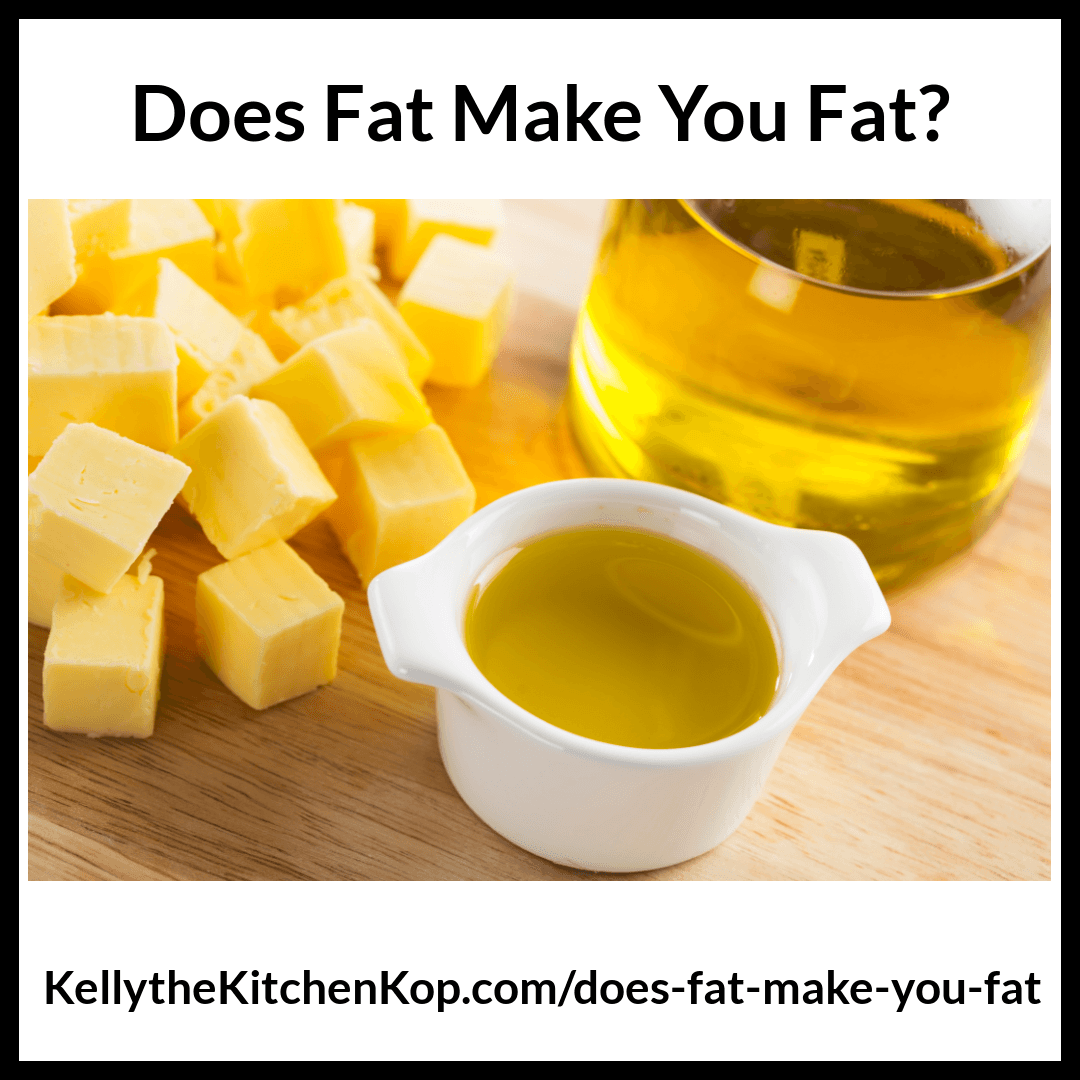
Does Fat Make You Fat? Dieting Answers
The last post discussed how researchers are learning that diet foods make us fat. Today I want to explore a similar topic, this time regarding the issue of dietary fat itself: does fat make you fat?
- PART 1 – we'll look at saturated fat, cholesterol and heart disease issues in this post (and one little tid-bit about the role of fats related to sexuality)
- PART 2 (below) – specific principles related to fats & dieting
- Read all posts on this topic of healthy fats here.
“Kelly, you're a FREAK, you're telling me I should try and eat MORE fat?”
If there is ONE thing I want to get across to you through this blog, it's the fact that healthy fat is needed for our bodies to be well! I know, I know, you've been taught that for so many years, it is very difficult to wrap your brain around the fact that it may all be a farce, from someone like me no less – you must wonder how I could dare to make such a claim, but I hope you'll keep reading so I can attempt to convince you.
First, what about saturated fats, cholesterol and heart disease?!
I've heard many analogies about the role of cholesterol in our bodies. One is that when we're prescribed statin drugs, it's like “shooting the messenger” – high cholesterol isn't the problem, it's just a symptom of a problem going on somewhere else in your body – such as damage to your arteries from eating unhealthy fats, like highly processed vegetable oils, trans fats, margarine, etc. (By the way, statins are known for their many side-effects: often turning a healthy person into a “patient” rather quickly.)
From “The Truth About Cholesterol and Fat“: Does fat make you fat?
“America has been on a low-fat diet for over 30 years. Yet we’re fatter than ever, we have an epidemic of diabetes, and our cholesterol levels are rising, not falling.”
“If you deprive yourself of cholesterol (and make up those calories in carbs and sugar), your metabolism goes into famine mode and your liver overproduces cholesterol to make up the difference and stock up. This overdrive state can’t shut off until you start eating cholesterol again. So, a low-cholesterol, high-carbohydrate diet can actually lead to high cholesterol!”
From Nina Planck in “Real Food, What To Eat And Why“
“The modern habit of eating chicken breasts and other lean cuts trimmed of all offending fats is new, an aberration in three million years of human history. Most people never ate protein without fat for the simple reason that in nature, protein and fat go together.”
Now an excerpt from an article titled, Why Butter Is Better (notice the many references listed at the bottom of the article at this link):
“Heart disease was rare in America at the turn of the century. Between 1920 and 1960, the incidence of heart disease rose precipitously to become America's number one killer. During the same period butter consumption plummeted from eighteen pounds per person per year to four. It doesn't take a Ph.D. in statistics to conclude that butter is not the cause. Actually, butter contains many nutrients that protect us from heart disease. First among these is vitamin A which is needed for the health of the thyroid and adrenal glands, both of which play a role in maintaining the proper functioning of the heart and cardiovascular system.“
“A Medical Research Council survey showed that men eating butter ran half the risk of developing heart disease as those using margarine.4“
The article goes on to explain more:
- “Butter has anti-cancer properties.”
- “The vitamin A in butter is essential to a healthy immune system.”
- “Butterfat contains glycospingolipids, a special category of fatty acids that protect against gastro-intestinal infection, especially in the very young and the elderly. For this reason, children who drink skim milk have diarrhea at rates three to five times greater than children who drink whole milk.12 Cholesterol in butterfat promotes health of the intestinal wall and protects against cancer of the colon.13 Short and medium chain fatty acids protect against pathogens and have strong anti-fungal effects.14 Butter thus has an important role to play in the treatment of candida overgrowth.”
- “The notion that butter causes weight gain is a sad misconception. The short and medium chain fatty acids in butter are not stored in the adipose tissue, but are used for quick energy. Fat tissue in humans is composed mainly of longer chain fatty acids.15 These come from olive oil and polyunsaturated oils as well as from refined carbohydrates.”
What are you putting your fats ON?
I'm not talking about sitting down to a meal of butter. I'm just suggesting you use it when cooking or on your veggies, etc., without the guilt. As Sally Fallon (from the Weston A. Price Foundation) has said, “You should worry more about what you're putting your butter ON (carbs), than about the butter itself.”
So which fats are healthy?
I've eaten healthy fats (animal fats, dairy fat, coconut oil, olive oil, eggs, etc.) liberally…yes, I said it, liberally, for years and my cholesterol numbers are great and my weight stays fairly stable. (Now if I could just curb those sweets a little more, maybe I could lose 10 pounds or so, too…)
Low sex drive?
I'll end with this last excerpt, related to sexuality and fertility, since I'm amazed at how often I hear women complain about this: “Very few of us recognize the connection between nutrition and libido. A lifetime of nutritional deficiencies creates the preconditions for hormonal imbalance. Chronic dieting has a terrible impact on your energy and self-image, and therefore on your sex drive. Low-fat diets are a special problem, because your body needs lipids to make its hormones, including the testosterone needed for sexual response.”
Diclaimer:
As with anything and everything you see on this blog, be sure to do your own research and talk with your doctor before you make any drastic changes in your life. I don't know what your specific health issues might be and I don't know your health history. However, don't JUST talk to your doctor without researching it yourself, too. Most doctors' main area of expertise is in the field of medicine. I'm not saying that is all bad, but nobody can know everything, so what would be especially helpful is if you had a doctor who is knowledgeable about the natural ways of looking at things, too, and who doesn't necessarily use medicine as a first line of attack.
PART 2 – Now let's look at specific principles related to dieting
Let's get to the nitty-gritty with some dieting answers
It's true; gram for gram, fat has more calories than proteins or carbs. BUT ALL CALORIES ARE NOT THE SAME! As I said before, I'm not suggesting we sit down to a meal of butter, but a diet with 35-40% of calories from fat is nothing to fear, instead we should enjoy it. NOT by counting how many grams of fat we eat per day, either. Just don't be shy about cooking with healthy oils, and slathering some butter on your fresh veggies!
- Fat helps us to feel full, this is important for obvious reasons. It satisfies us – we crave cholesterol and fat because they're essential to our health and they help our bodies to digest and USE what we've eaten.
- What do fats, protein and fiber all have in common? They all slow down the insulin response in our bodies, which is spiked after eating carbs (bread, pasta, rice, any sugary foods, including fruit, etc.)
What does insulin have to do with weight loss?
Read some excerpts from this Diabetes Health article by Jamie Bailes, MD, The fat-free fallacy, obesity's enabler?:
- “I researched and relearned the physiology and biochemistry behind low-carb diets. As I began to take a closer look, my findings were not what I expected. It all came back to insulin. Insulin is what causes fat storage. Insulin is what drives weight gain. Insulin is what is secreted when we eat carbohydrates.”
- “Let me say this again: insulin promotes the production and storage of fat. That's right, even without eating fat, our body produces fat from sugar.” (All carbs convert to sugar in our body.)“
- “In the appropriate amount, insulin keeps the metabolic system running smoothly and everything in balance. However, in great excess it becomes a dangerous hormone wreaking havoc through the body. Mountains of scientific evidence implicate insulin as the primary cause or significant risk factor for high blood pressure, heart disease, arteriosclerosis and high cholesterol. It may also have a causative role in type 2 diabetes.“
“But I lost weight on a low-fat diet!”
We all may know someone who has great self-discipline and lost weight on Weight Watchers or other low-fat diets. But what if it had more to do with how they were cutting down on portion sizes, processed foods and sweets consumption and had nothing do with dietary fat? What if they instead had watched their carbs and portions, ate enough healthy fats (to slow down the insulin response in the carbs), and were sure to include exercise into the plan, could they have had an easier go of it? And a better chance of keeping the weight off? Not to mention a healthier body overall with a stronger immune system, better regulation of insulin levels, healthier liver function, etc.
Read an excerpt from this article, “The fat that can make you thin”:
“The simple truth is that low-fat diets don't work-not permanently. You can lose weight on them if you starve yourself. You're hungry and miserable the whole time. In order to keep the weight off you must continue to limit what you eat and go hungry. Few people are willing to live a life of constant discomfort. For this reason, low-fat dieting is difficult to maintain for any length of time. Consequently, most people eventually revert back to old eating habits. When they do, the weight comes back.“
Bottom line for weight loss
If you want to drop extra pounds and enjoy great health, here are 7 suggestions:
- Get over your fat phobia and add healthy fats back into your diet. Don't hesitate to put them on things like plenty of yummy local, preferably organic, veggies! (Healthy fats are traditional fats such as: full fat dairy products – best from grass fed cows, egg yolks, cod liver oil, animal fats like lard & tallow, cold-pressed extra virgin olive oil, coconut oil, butter, and small amounts of sesame or peanut oil. Unhealthy fats include: all hydrogenated and partially hydrogenated oils/trans fats, margarine, corn, safflower, rapeseed/canola, sunflower, and soybean oils, especially when refined or heated.)
- Watch your carbs and portions – I'm not always great at this part either, but I try to keep an eye on the scale and when I see I'm creeping up a little, I'll make the decision (that's often the toughest part), then watch the carbs for a couple weeks, and that's all it takes to get me back where I need to be. I never cut out meat or healthy fats. (Self-control is never easy, but I try, with God's help, to control my body, and not let cravings, desires, etc. control ME. I fail often!)
- When you do eat carbs, try to eat more of them properly prepared and whole grain. (When I don't serve properly prepared or whole grains, I do use mostly einkorn flour and einkorn pastas though! Read what is einkorn and why is it better.)
- AVOID trans fats and high fructose corn syrup, which is in most all processed foods! If you find items in your cupboards or frig with those ingredients, if at all possible, I suggest you toss them straight into the trash. Start reading labels so you can avoid them.
- Limit or eliminate the sweets — and hopefully you're better about this one than I am!
- Don't forget your OMEGA-3'S, especially if you're pregnant or nursing! Eating more fish and taking Cod liver oil are both great sources. These are very important for everyone, but especially for proper brain development in your baby and the avoidance of childhood illnesses! Here's an article on the importance of omega-3's for pregnant Moms and children: proper brain development.
- Exercise – find something you love to do! I may not limit the sweets as much as I should, but I am going for a run in a few minutes on this gorgeous spring day!
DISCLAIMER:
As with anything and everything you see on this blog, be sure to do your own research and talk with your doctor before you make any drastic changes in your life. I don't know what your specific health issues might be and I don't know your health history. However, don't JUST talk to your doctor without researching it yourself, too. Most doctors' main area of expertise is in the field of medicine. I'm not saying that is all bad, but nobody can know everything, so what would be especially helpful is if you had a doctor who is knowledgeable about the natural ways of looking at things, too, and who doesn't necessarily use medicine as a first line of attack.
More you might like:
- Kelly's yummy popcorn recipe with coconut oil
- My favorite kitchen gadgets

- Wonder how the myths surrounding saturated fats began in the first place? Read about The Oiling of America by Sally Fallon
- Cholesterol meds – what about LDL & HDL?
- Dr. Mercola: Why don't the French get fat?
- Read these Q & A’s from the Weston A. Price site: “Some typical questions and misconceptions on fats and oils.” Here's an excerpt: Butyric acid is found almost uniquely in butter, so it is not surprising that this innocent fatty acid is singled out for heinous crimes. Butyric acid has anti-microbial effects and feeds the good flora in the colon. Likewise lauric acid, found in large amounts in coconut oil, and myristic acid, found in butterfat and certain other animal fats, have roles to play in the body–especially lauric acid, which has antimicrobial effects and plays a role in signaling processes. Butterfat and coconut oil are competitors of the powerful vegetable oil industry, so it is wise to be very skeptical when you hear claims that these fats cause disease.



Shary says
Sorry to burst any bubbles, but fat will definitely make you fat if you consistently eat huge amounts of it. I once administered a ketogenic diet for seizure control. The patient was losing way too much weight, as is common with a keto diet. Upon adding an abnormal amount of healthy fats to the diet (on the advice of dietitians at Children’s Hospital), the unwanted weight loss stopped immediately.
Fat, of itself, probably won’t make you fat, but absolutely nobody eats nothing but fat. As was stated in another comment here, a lot depends on what you combine it with: i.e., buttered bread, buttered oatmeal, buttered noodles, plus butter- and sugar-heavy desserts, etc. That sort of eating will lead to obesity and poor health. Moderate consumption of fats is good. The human body does require some fat for optimal health, but it’s NOT okay to go overboard with it.
KitchenKop says
Here’s the thing though Shary, most people wouldn’t go “overboard” with fats, because they naturally fill us up and make us feel satisfied. As you said, nobody eats only fat.
Kelly
Denise says
Three million years of human history?!?
Todd Huinker says
Hi Kelly,
I’m a heart patient and like what I’ve read here. In fact, I just started using coconut oil only about 3 weeks ago when I saw a video about how it helps alzheimer’s.
I clicked on your link: “Why Butter Is Better (notice the many references listed at the bottom of the article at this link):” but there was nothing there….I think the info has been taken down. Did you by chance copy any of the info? If so, can you send it to me. I’m going back to butter, whole milk.
I’ve had valve replacement surgery….genetic….did it when I was 50. I’m turning 63 this year. I’ve had 4 angiograms since and everyone of them yielded the same result. My arteries are “pristine”….the same description from 3 different cardiologists. My cholesterol has been high ever since I’ve been checked. I have long thought that the interpretation of cholesterol tests was in error where I was concerned and all the info I picked up from your site has convinced me. I watched a whole bunch of other videos on YouTube which were related to the one you have posted on your website. I’m not surprised the government is responsible for steering us down the wrong road…..I feel the same about Global Warming. Despite tons of evidence to the contrary, they keep insisting it’s real….nonsense in the case of G.W. and nonsense in the case of fats.
Thanks,
todd
KitchenKop says
Hey Todd!
I just fixed that link (thanks for telling me) — all the WAPF links from before they redid their site are broken and have to be fixed, it drives me crazy.
Good job on taking the coc. oil and going back to butter and whole milk!! Smart man. 🙂
Kelly
cay santi says
sorry medical technologist…hehehe I was thinking of a different phrase…hay!!
cay santi says
By the way…I am both a Medical technology and a registered nurse…:)
cay santi says
Its best to eat, poached eggs with the center still soft and runny. Ive been on a high protein diet for a year now, not eating carbohydrates at all. Including potatoes, rice, pasta or any other flour products. I only eat red meat, fish and shell fish,NUTS and lots of vegetables and lots of fluids. I got used to it to the point that eating rice or bread, makes me wanna puke. I lost alot of kilos from 57kgs to 43.kgs without any complications. And now I am back to eating small portions of rice, without worrying about getting back all those stubborn fats. Where i got my energy? I dont rely on carbohydrates for this anymore since I had all these stubborn fats to metabolize. Being on a high protein diet, I had to eat fats coming from butter, cheese, milk..all the stuff I loved! Runny egg yolks yes!Now that I do not have any stubborn fats to metabolize anymore, I had to slowly incorporate carbs into my diet now…But this time I will not overdo it, because I know for a fact that eating lots of carbs will be stored as body fat if I do not utilize it as an energy source. I dont know if my input is going to help anybody for it was mentioned above that “everyone is different”…Dont be afraid of eating too much protein, I asked my doctor about my diet and he says theres nothing wrong with it. so if it suits anyone, do as i do… “ketosis” is when you have metabolized fats”ketone bodies) in your urine,In diabetics, this is a state of “HUNGER”- no sugar in blood, thats why the body fats are metabolized for energy and food. It is not harmful being in a ketosis state. Drink lots of fluids! goodluck!
Eric says
Hi Kelly, Thanks for all this information! I was looking for information on whether fat makes you fat. I got so much more than I barganed for and I think I’ll be thanking you later.
I am on Weight Watchers and have been “addicted” to that I Can’t Believe It’s Not Butter spray. Well….I had to go to the store to pick you some scallions, and while I was there, I bought some organic butter and am throwing away the spray stuff. Thanks for the insight….and hey….I betcha my taste buds will be happier too! (of course I’ll have to be cautious with portions…but I can do it!).
Sorry for rambling…and thanks again!
Eric
Kelly the Kitchen Kop says
Hey Eric, that’s music to my ears! Have you seen all the posts listed here: https://kellythekitchenkop.com/2008/08/healthy-fats-oils.html ? There’s a lot more info for you to check out at that link. Let me know if you have any questions I can try to help you with. 🙂
Kelly
Eric says
Hi Kelly! Thanks! I’ll check that out. You know…I was looking for information for an article I’m writing about fat…..I thought I was going just be learning something about that calories, not fat…makes you fat. WOW….did I have alot to learn, from your site and some others like it. Then I was on WebMD…and there they were toting canola oil as healthy…yikes! I have already learned as I’ve been researching other things, that you can’t trust the corporations or the FDA. We have to fend for ourselves to get good information just to get healthy (so thank you for the info you provide here!)!
I’m trying to get my health back, I was at 347#, but now am at 290# and losing. I’ll get there…but with information like what you have provided, maybe I’ll have a fighting chance….and a little tastier too…let’s face it; I CAN believe it’s not butter! I just have to get out my teaspoon and measure, measure, measure!
Thanks again….and love your site and love your writing you keep it fun, even though it’s heavy stuff.
KitchenKop says
Eric, I know you want to lose more weight but keep in mind what Sally Fallon has said, “The problem isn’t how much butter you’re eating, it’s what you’re putting your butter ON.” I tend to agree. If you’re avoiding sugar and refined carbs, and going very easy on even the good carbs, then you don’t have to be so careful about portions of the good fats like butter, lard, tallow, and coconut oil. As a matter of fact, these fats keep you full, so you don’t binge on the starchy carbs.
Kelly
Eric says
Kelly, Wow! Ouch!…brain….hurts! 🙂 I don’t know if it was the same for you….but getting my head around all this….so many years of being force fed all this bad info! The last week or so as I’ve been learning more and more, I keep thinking about when I was a kid in the 70’s. We didn’t have any of this low-fat, packaged diet stuff we’ve been inundated with. I used butter and we didn’t have 98% ground beef….not even 90%….heck…there was only one choice and I think it was something like 75% or 85%! Oh….and also….I was just a little bit over weight (around 185#…boy…I wish I weighed that now!) Between all this information and the memories that it’s causing to pop up; the dots are slowly connecting in my head! Thanks for your help! 🙂
Eric
KitchenKop says
You’re welcome, sorry to make your brain hurt, LOL! I do remember that feeling well, though.
One more that might help you: https://kellythekitchenkop.com/2009/02/your-words-letting-go-of-the-low-fat-mentality-responses-from-nina-planck-sally-fallon-more.html
Good luck and keep us posted! Maybe you could share your story in a guest post someday? 🙂
Kelly
Eric says
Hi Kelly,
Um….butter is yummy! 🙂
I did measure it as I’m a bit OCD, but I did take your advice as far as having it on my brown rice and broccoli….and was sooooo tempted to have a slice of whole wheat bread (vehicle for more butter), but didn’t want to have an additional carb when I was already having rice….but Kelly, OMG! I haven’t had real butter in so long. Yum. Been reading more that you have here and I’m looking forward to cooking with coconut oil and I’m interested in trying ghee too. I cook with alot of olive oil, but will be more careful with that and the canola….I threw it out. Just starting. I know I have alot to learn and we’ll see how the weight loss goes. I am down over 50# so far, but have lots to go (ramping up the exercise as well). My goal is to be at goal next summer (I’m 290 now and my goal is 175), and to climb Mt Monadnock in NH next summer as well. I haven’t been able to climb it in about 6 or 7 years. Anyway…I’m starting to ramble.
Would love to share my story …. we’ll see how it unfolds! And…butter, butter, butter! Oh…and what you said was right….what I had was enough and I was satisfied.
Thanks again
Eric
D. says
@ Eric: Oh man, I had to laugh when I read your comment about the I can’t believe it’s not butter spray. You’ll have to go to YouTube and look up James Gregory – he’s a clean comedian who talks about this. It’s hilarious.
BTW, you’ll love butter better . . . ;->
Eric says
Thanks D!
Checked out James Gregory….and, as a guy who sprays (well…who did spray) his butter…..um…yeah….there will be no grandkids! Sorry….couldn’t resist, I caught his “Typical American Lunch” video where he talks about the “butter mist” HAHA!
Tonite’s my first night with “real” organic butter. I’m a little nervous about willpower and portions, but I’m down over 50# so far, so…I can do it.
Thanks!
Eric
tanya says
Hello,
So, if I eat butter on a thin slice of buckwheat bread, I will put on weight?
Do I only eat it with vegetables?
KitchenKop says
Tanya,
Everyone is different so you have to figure out what works for you. Some give up grains for life, others give up just the refined stuff or only eat properly prepared grains and do fine. Either way, adding butter to whatever you’re eating is always a good thing, and tastes great, too!
Kelly
Audrey says
Hi Kelly! I
KitchenKop says
Link away! 🙂
KitchenKop says
Hi Annie,
Happy Jesus’ BD to you, too! 🙂
We can’t afford all grass-fed right now either, so I buy it now and then. In between we buy butter that is pasteurized and from a local farm that we know uses no hormones and that they’re out on grass at least sometimes. Butter is so good for you that I suggest you just go with the best quality you can find and can afford, with a goal to buy the better kinds when you can.
Egg yolks and oxidization…I haven’t gotten a clear answer on this one so I go with common sense. People have cooked their eggs for ages, so I feel confident it’s OK.
Thanks for saying hello today!
Kelly
D. says
The very first question on the Q & A here in this link answers the question about eggs and oxidation.
https://www.westonaprice.org/faq/793-faq-miscellaneous-food-questions.html
Jean says
My Norton is telling me that this is an unsafe web page to go to.
KitchenKop says
Mine just did that too when I tried it, so I did an “override” (told it to go there anyway, because I knew the site was good), and it was fine. It may have something to do with the glitches they’ve had since they tried to switch their to their new site a few years ago – they had trouble with dead links, etc.
Kelly
Annie M. says
Hi, Kelly, this was linked somewhere recently – I can’t remember! I love exploring your site, even on CHRISTmas 😉 while my kids are napping.
Two wonderings: someone asked about whether cooking an egg yolk turns it into oxidized choleseterol – any ideas?
Also, re: butter – I love it. BUT paying for grass fed is quite beyond us right now, at least in the quantities we like to consume. It’s something like $11/lb and at Costco it’s more like (fluctuates) $1.50/lb. SUCH a difference. So, what drawbacks are there to the grain-fed, conventional butter? It’s still worth using it as a fat, right? Or are we getting super concentrated toxins from the conventional feed, abx, and hormones. Wow, to type that out makes it really sound bad, but $11/lb is REALLY not doable. Raw, grass fed milk is about $6.50/gal, and that’s only about three times what we’d pay for conventional, but the butter is much much more. Thanks for any thoughts 🙂 and Happy Jesus’ birthday!
My Boys' Teacher says
Thank you Kelly, for both of your replies. I really appreciate it. I’m still researching myself and coming up frustrated, I’m hoping your experience with this subject matter will make it all make more sense to you 🙂
Looking forward to hearing what you find!
My Boys’ Teacher
Kelly says
My Boys’ Teacher,
Great question and you’ve got me in “sleuth mode”, I’ll either reply here or post on this as soon as I get some answers.
Be patient, I’m having router issues…it’s always something!!
My Boys' Teacher says
Doesn’t cooking an egg turn the cholesterol in the yolk into oxidized cholesterol?
My Boys’ Teacher
Anna says
Great topic, Kelly. I think too many people (including some researchers, dieticians, and doctors) fail to realize that dietary fat is not the same as stored body fat. The body can and does store fat in fat cells from dietary carbohydrates (broken down into sugars, then converted into triglycerides); dietary or body protein (converted into glucose, then into triglycerides); and dietary fat (broken down into fatty acids), but fatty acids from dietary fat is be stored when insulin is also high, not when it is low.
The key to storing (and not being able to access stored fat for energy) is raised insulin production, which is a direct response to dietary carbohydrates. There is also an enzyme, produced by carb intake, that is necessary to dismantle the triglycerides outside the fat cell so they can get across the cell membrane, as well as re-assemble the triglycerides inside the fat cell. Eat fat without many carbs (like butter on non-starchy veggies, and it can’t be stored in fat cells. Not the same for bread on butter (Like Sally Fallon says, watch more about what you put the butter ON). Excess dietary fat will either be burned for energy or burned off as heat (thermogenesis).
Eating enough protein is important. If not enough is eaten, then the body will convert muscle and organ protein into glucose for fuel and that can raise insulin somewhat . Too much dietary protein can also indirectly raise insulin. Of course, it bears reminding that animal proteins come without many carbs, and plant proteins are quite starchy.
Also, fat and protein are essential *structural* building materials for the body. Dietary carbohydrates are not (only used for energy).
Since I have cut carbs as much as I can without reducing non-starchy veggies, I have been making sure I get enough protein without overconsuming protein, and making a conscious effort to increase the amount of fat I consume (primarily saturated, but the home-rendered lard I am using lately is also high (about 45% ) in monosaturated fatty acids. I’m using heavy cream in my coffee and cocoa; high fat coconut milk, cream, & whole egg baked custards for dessert; vegetable gratins with ample heavy cream and cheese; fattier, bone-in cuts of meat instead of lean skinless, boneless cuts; etc. I’m finding fat to be a great energy source, good for my skin, and my weight has dropped almost 5 pounds in the past couple of weeks (mostly from my middle). I also haven’t had a cold all winter.
It’s really great to read more people who think old-fashioned fat is a good thing.
Anonymous says
Kelly,
Thanks, I’ll check that out. Of all the local ones I’ve tried the one that I like the best is Sundown brand. I know there is more to it than just which sits the best with me so I’ll go off to read your cod liver post. 🙂 I wonder if there is a connection between tolerance and quality.
Beth
Kelly says
Hi Beth,
Hmmmm, that is very interesting. I love that you were able to get off the statins and on to the fish oil. I’m wondering what kind you take, though? Check out the cod liver oil post – there I talk about the differences between a high quality cod liver oil and a regular fish oil. (In part 1)
Nice to “meet” you!
Kelly
Anonymous says
Hi Kelly,
My cholesterol skyrocketed due to chronic infection. I don’t have the research links, but my doctor explained that it has a role in fighting infection. However, with a long-term chronic infection it goes up and stays up – which is not good. Each month it went up and when it hit 270 he put me on Crestor. After a few years of this I made a deal with my regular doctor to get off of the drugs… I take 8 fish oil pills a day to replace the Crestor.
I look forward to the other posts on this topic.
Beth
anurag says
The article tries to provide good information but the presentation style has more pun than information itself. Author may need to take care of this in his future writings.