Kelly The Kitchen Kop

From the category archives:

Deidre Currie Festival

Archie & Jack

Read a neat excerpt from Nina Planck’s new book, where she tells about the heart-wrenching, yet beautiful story of Deidre Currie…

In the early nursing weeks, I often thought of my cesarean.  I was haunted by mothers who come home from the hospital with milk but no baby to drink it, and by babies who come home with no mother.  It still happens.  With plenty of milk on my shirt and time on my hands, I considered finding a local baby who needed milk and offering to share, but never did anything about it.

Deidre & Archie

More than a year later, I learned about Deidre Currie, a New Zealander and champion of real food.  After a quick and sure romance over real food, she married the American Archie Welch, settled in Michigan, started earning her nutrition degree, and with characteristic zeal planned a real food conference.  Within months of the honeymoon, Deidre, thirty-eight, was pregnant and eating better than ever.  The happy couple was planning a home birth, but instead Deidre ended up in the emergency room with a pulmonary embolism and the baby in distress.  Though failing fast, she willed herself to hold on long enough to give birth to Jack, who weighed more than six pounds despite being six weeks early.  Archie told me what happened next.

“The word went out to mothers and they started pumping for him.  His first meal in the hospital was breast milk from a mother who drove an hour and a half.  She dropped off the milk, gave us all hugs, and left.  She wouldn’t accept any money for gas or anything.  She said she was honored to help.  All the mothers have been screened for diet, supplements, and drugs.  About nine mothers consistently donate.  I’m sure he’s getting the advantage of a lot of different antibodies.  As his appetite increases and some mums drop out, I’ve been adding raw cow milk.  For a preemie, he is big.  At four months, he is seventeen pounds and over two feet long.  And happy.  Jack is not a fussy child.  Very calm, smiles a lot – but lets me know when he’s hungry.”

Deidre never saw or held her son.  But she left him a legacy to last his entire life.  In Jack’s short life, many mothers have already cared for him.  By way of thanks, Archie shares food with the nursing mothers.  “I figure if the mothers are getting good fats and nutrients from healthy raw cow’s milk, they will pass on those good things to Jack and to their own child.  I also give them cod liver oil, coconut oil, meat, books, and my undying gratitude,” he said.  “What I do for them pales in comparison for what they do for Jack.”

real food for mother and baby

Nina’s book went on sale yesterday, and you can buy it here:

Real Food for Mother and Baby: The Fertility Diet, Eating for Two, and Baby’s First Foods.

I was blessed to have met Archie, baby Jack, and a few members of Deidre’s family at the Deidre Currie Festival last fall.  (Ann Marie & I also met Sally Fallon that weekend!)  Read more about that amazing day and find the links to my notes on the talks:  the Deidre Currie Festival.

Check out the new KITCHEN KOP REAL FOOD INGREDIENT GUIDE: only $5!

DON'T MISS NEW POSTS:

Subscribe in a reader
or Subscribe via e-mail for free blog updates.


Learn more from the COMMENTS BELOW - join the conversation!

{ 4 comments }

In the final post on my notes from last Saturday’s Deidre Currie Festival, Sally Fallon’s talk on “The Oiling of America” tells how we came to believe the myth that saturated fats are harmful to our health. It grinds me like crazy that it is still quite common to hear someone say their doctor wants them to cut back on saturated fats, and often go on dangerous statins, because their cholesterol is too high. When I hear this, if it’s not the type of situation where I can talk openly, it’s torture keeping it in.

PLEASE, spread the word – send friends and family to this site or to the WAPF site. Let’s wake people up to the facts! Our bodies naturally crave healthy fats, and the more “they” try to beat this out of us, the more fat and unhealthy we become… Read on for some amazing facts that will surely convince you: eating the way our ancestors did is our ticket to good health. (There’s more on how I was convinced at the end of this post.)

First, be sure to also look over my notes from the other talks last Saturday:

THE OILING OF AMERICA by Sally Fallon

photo by Cheeseslave

As I go through my notes I see I have many holes, so here’s a link to the same information at the Weston A. Price site online: The Oiling of America. I’ll just hit on a few highlights here, but be sure to go there to learn more about the big picture, and more importantly, to see all the resources listed to back up the following

THE LIPID HYPOTHESIS

  • The American Heart Association was founded for the main purpose of promoting the “prudent diet”: corn oil, margarine instead of butter, cereal, and heaven forbid you have any lard or cream. Dr. White (the EEG inventor) on the panel at the AHA disagreed: “See here, I began my practice as a cardiologist in 1921 and never saw an Myocardial Infarction (heart attack) patient until 1928. Back then the diet was butter and lard, and we would all benefit to go back to when no one had heard of corn oil.”
  • The “edible oil” industry is very powerful.
  • For years after this myth took hold, most doctors still believed that low cholesterol caused heart disease. The AMA held out a long time before finally adopting this theory. They knew that low fat diets carry risks and cause some nutritional deficiencies. Most scientists waited until they were retired to speak out, or their funding would be pulled.
  • Trans fats are usually lumped in with saturated fats, so when studies showed a correlation between fats and cancer, it was due to the trans fats.
  • Mary Enig got an article published, which criticized the manipulation of the data. It showed that people eating animal fats had less cancer and heart disease, and asked for more research into trans fats. It was published in an obscure journal, but got a lot of publicity. The industry was not happy, and six weeks later she was called to a meeting at the University of Maryland. They were very angry, one had a stack of newspaper clippings and said, “We’re not happy about this article, we watch the journals to make sure only articles favorable to our industry get published. I thought my colleague was watching it and he thought I was, this is not going to happen again.”
  • Mary was told, “If you continue this research, we’ll cut off your funding, because we control the funding.”
  • Mary was able to finish her PhD, and she showed how trans fat interferes with the enzymes that your body uses to fight cancer. She was completely blackballed by her profession.
  • She once overheard people arguing in the hall about what the official “too high” number should be for cholesterol. “We have to make it 200 or we won’t have enough people to test.” Today they have lowered it even more and say we can’t get it low enough. If someone had a heart attack and their cholesterol was low, they still put them on drugs because it was “obviously not low enough.”
  • William Castelli, Director of The Framingham Study: “We found that the people who ate the most cholesterol, ate the most saturated fat, and ate the most calories, weighed the least and were the most physically active.”
  • Whatever we might gain in not dying of heart attacks from low cholesterol, we’re now dying instead of other things like cancer and suicide. (Due to the effects of lowfat diets.)
  • The Lipid Research Clinic’s Coronary Primary Prevention Trial in 1984 used 150 million taxpayer dollars and is the study most often used to justify lowfat diets. One group was on cholesterol lowering drugs and the other group was on a placebo. They were all on a low cholesterol/low saturated fat diet – non-dairy creamers, Wesson vegetable oil, margarine, etc. The group taking the drug had a decrease in heart disease, but an increase in death from cancer, stroke, violence & suicide. (As above, this is due to the effects of lowfat diets and not having the protective effects cholesterol provides.)
  • The “French Paradox“: in France they have high levels of cholesterol and low levels of heart disease. There are Dutch, Swiss, Finish & Austrian paradoxes as well. (Note from Kelly: you’ve probably heard of the book, French Women Don’t Get Fat - I haven’t read it, but love the title.)
  • There are many other studies going on that contradict the lipid hypothesis.
  • You’ve got to read this amazing story about George Mann, who was a former associate director of the Framingham Project. Here’s an excerpt from his comments on the lipid hypothesis: “It is the public health diversion of this century…the greatest scam in the history of medicine.”
  • The National Cholesterol Education Program’s stated goal: “Change physician’s attitudes.” They showed docs how to measure for cholesterol, how to give dietary advice, and how to treat and reduce cholesterol and saturated fats. In 1990 they recommended the “prudent diet” for all Americans over the age of two, and packets were given to pediatricians all over the country to make sure they were giving this advice to mothers: use margarine instead of butter, no more whole milk, not too many eggs.”
  • Children need animal fats for normal growth from birth to 18 or 21 years. Adults need fats for normal growth and for reproduction, for brain connections, for all systems in the body.

This was more than just bad advice, this was genocide

  • This is the #1 reason why we have learning disabilities, autism, growth problems, health problems, and infertility (an epidemic now). Our kids can’t grow normally without animal fats in their diets.
  • Women on low-fat milk often can’t get pregnant. No one looks at what this does to little girls if they’re on low-fat diets at the age of two.

CHOLESTEROL IS A GOOD THING:

  • Cholesterol is KEY to animal and human life. It is nature’s healing substance. When there are wounds or tears in the arteries, cholesterol goes in for repair. Cholesterol provides structural integrity and proper “stiffness” to cells. It is a precursor to vitamin D, and needed for healthy bones, metabolism, and reproduction. It is a precursor to the sex hormones – they are made from cholesterol. It is a powerful anti-oxident protectant against free radicals. It is needed for proper brain and nerve functioning and required for the serotonin receptors in the brain. (Vicious dogs tend to have low cholesterol.) It is needed for good blood pressure levels and blood sugar levels.
  • As we age we need more protection, so it is natural for cholesterol to go up, it is the natural role of the body.
  • Accurate cholesterol readings are difficult anyway. Differences can show up due to someone’s age, what they ate, their stress level, the time of the test, whether it is after fasting or not.
  • Our body in its infinite wisdom will make more cholesterol when we’re stressed, to help the body deal with it. It’s your best friend when under stress.
  • For men, if their cholesterol is over 300 and under 60, there is a slight increased risk of coronary heart disease. For women and elderly, there is no difference in the CHD rate for any level of cholesterol. Higher cholesterol is actually associated with a longer lifespan.
  • We should worry if our cholesterol is too low, not too high.
  • There is little evidence that HDL or LDL even matters – our body makes both and knows more than all our PhD’s.
  • Oxidized cholesterol IS a problem – found in powdered milk (which is in all reduced fat milks at the store), powdered eggs, etc. They oxidize cholesterol by forcing fat into teeny tiny holes under high pressure.

DANGERS OF STAINS/CHOLESTEROL LOWERING DRUGS

  • Statins were discovered by the Japanese, who found the substance very toxic in animal trials. It was then sold to Merck who speedily got FDA approval.
  • In every rat study, stains caused cancer.
  • It is currently being promoted for healthy men and women categorized as “at risk” for any little risk factor, including children over age 8 (now they’re trying to change this to 7 months!), teenagers, diabetes in the family, etc.
  • According to promoters, stains have very few side effects. However, these have been reported: fatigue, memory loss, reduced mental capacity (freak accidents), muscle wasting, intestinal disease, reduced libido, depression, accidents, suicide, cancer, reduces production of CoQ10 which is needed for normal function of muscles and heart.
  • Sadly, many who develop these side effects will think, “What do you expect, you’re getting old.”
  • Statins block the absorption of vitamin A, which is critical for hormone production.
  • They can result in neuropathy (weakness, tingling, and pain in hands and feet).
  • Go to www.askapatient.com and read reactions from people reporting side effects. Many are delighted that their cholesterol went down…
  • The warnings when taking statins say that they are “not for those who are pregnant or may become pregnant” due to the horrible birth defects they can cause; yet they’re pushing them on 8 year old children…don’t they think those girls will be pregnant someday?!

THIS IS SHOCKING – no need to wonder after you read this:

WHAT DOES CAUSE HEART DISEASE THEN?

WHO PROFITS FROM THE MYTHS ABOUT CHOLESTEROL AND SATURATED FATS?

  • Cholesterol testing and treatment is a 100 BILLION dollar business
  • Hydrogenated fats are a 150 billion dollar industry
  • Cancer and other diseases (often caused by avoiding healthy, healing fats) – 100 billion dollars
  • Behavior and learning disabilities – 70 billion dollars

That’s the end of my notes on Sally’s talk.

I’d love to hear what you think about this. If you haven’t commented before, I’m asking you to do it now. Is there something that keeps you believing there is some truth in the lipid hypothesis? Share it with us, let’s talk about it more! If you now believe how beneficial and healthy saturated fats are, but you were a “hard sell”, please tell us your story! What finally made you “get it”?

For me it came down to common sense. Looking around I saw friends and family who struggled with weight issues their whole lives, but stuck to the lowfat diets because that’s what they were told by their doctors, Weight Watchers, TV commercials, magazine ads, etc. I came to realize the missing link was the basic truths found in what people ate for thousands of years, before “they” said that things like butter and real, whole milk were evil. Read more about my “food conversion” story.

MORE READING

Check out the new KITCHEN KOP REAL FOOD INGREDIENT GUIDE: only $5!

DON'T MISS NEW POSTS:

Subscribe in a reader
or Subscribe via e-mail for free blog updates.


Learn more from the COMMENTS BELOW - join the conversation!

{ 14 comments }

It was exciting to hear Karen Lubbers speak at the Deidre Currie Festival on Saturday, since she owns the farm where we get our raw milk. (Read her guest post from a while back about finding clean, safe raw milk.)

Sorry, I was too far back, so this is a bit blurry…

Following are my notes from Karen’s talk:

How Karen became a dairy farmer

  • When our daughter, Jamie, was six years old, she was diagnosed with a malignant brain tumor. It was a terrible ordeal. She went through eleven hours of surgery, and died twice on the table. She received two years of chemo, and six weeks of radiation. Thankfully, she turned 22 this summer. Although she will never live on her own (she has hearing loss, severe memory loss and battles fatigue), she is vibrantly healthy – Jamie is full of joy.
  • She goes back to clinic once a year, and this last year I asked, “How is she doing compared to other kids who had a similar diagnosis, in a similar time in history, and who received similar treatment?” They said, “She is so far on top of the heap, she’s not IN the heap.” I know it’s because of the food.

“Much of Jamie’s healing has to do with our first cow.”

  • Going through this we were very overwhelmed by it all and had to do something on our own. We went to a conference on organic agriculture and there was someone on the agenda named Sally Fallon. I was totally riveted by what she was presenting. All of a sudden there was some nutrition information that made sense and spoke to my internal knowing. As a matter of fact, we have a cow named Sally, and on our farm that is a high honor indeed! She’s gentle, intelligent and persistent.
  • We’re also now farming, which we weren’t before. We practice rotational grazing and increasingly practice mod grazing; we do not rake our beef at all. We feed our non-grazing animals organic grain. (Note from Kelly – this city girl doesn’t understand most of that paragraph and couldn’t get in touch with Karen OR get anywhere when I tried Googling. Kent grew up on a farm and if he was still awake I could run it by him, but as usual, I’m working on this in the middle of the night. A request to any farmers out there, or Karen if you read this when you’re back in town: please comment below and explain what is “mod grazing”, and what it means to “rake” beef? Also, please correct me if I got anything else wrong…which is very likely. Thank you!)
  • OK, Karen emailed me back and I had things a little mixed up… “The word ‘rake’ should read ‘grain’. We do not grain our beef (feed them grain). Mod grazing should be mob grazing. The cattle are packed pretty densely into a small paddock. It’s an imitation of natural mob grazing as in buffalo, antelope and similar species. Thanks! Karen Lubbers”

Our food looks very different today than it used to:

  • Our son, Casey, runs his Little Rooster Bread Company here on the farm. He ferments all his bread products.
  • Our pigs get excess milk from the cow share program.
  • We raise our own meat, fruits & vegetables, and cows for milking.
  • I freeze, can, dry, and ferment for winter.
  • I can’t tell you the last time I bought food from grocery store. I occasionally buy wax paper there.
  • I don’t use many supplements, except Jamie gets cod liver oil and garlic for seizures.

We learned a cow is a lot more than a source of milk.

  • Humans were milking cows long before growing crops. There are only two domestic species that no longer have their counterparts in the wild at all: cow and corn.
  • Recommended: The Omnivore’s Dilemma: A Natural History of Four Meals and King Corn.
  • 40% of cows in the U.S. have mastitis. Life expectancy for conventional cows is 42 months and is 10-15 years for cows out on pasture.
  • An old saying, ‘a man needs piece of land, a cow and a wife, and he don’t strictly need that last.’ I have two sons and I suspect they need the latter the most!
  • There is a book by Annie Dillard called, Pilgrim At Tinker Creek. (Her first book: The Living: A Novel.) It is about life on the West coast in the late 1800’s when the depression was threatening livelihoods. Two men were in a bar discussing their impending financial ruin, one reassured the other that they’d be OK because they own their own cow.
  • With our cow, Rosie, we had independence from what was happening with commercial milk. She taught us that all milk is not the same.
  • As an ex-diet coke lover, I was a little nervous about drinking raw milk. I set raw milk and commercial milk each in a jar on the refrigerator. The raw milk separated and formed a cheese looking substance on top – it smelled a little sour, but not bad. (I found out later that it is called clabbered milk.) In the commercial milk there were things floating around. It was gray and brown, and it looked like someone blew their nose in there. I took the top off and it was really nauseating. That did it. I gave raw milk to my immune suppressed young daughter, she thrived and we all thrived. With an open bucket out on the pasture and without any cleaning chemicals, we all thrived.
  • Raw milk is deliciously diverse, it varies by season, by where the cows are on pasture, and it varies by cow. There are all kinds of milk.
  • If you have a product that is consistent, it is dead in my opinion.
  • Dirty milk and dirty spinach can cause problems. Pasteurization and irradiation are a cover up for dirty operations. They do nothing to solve the problem, but they create a whole other set of problems on their own.
  • We are rightly concerned about what is in our milk these days: pesticides, fungicides, antibiotics, and hormones.
  • However, I am more concerned with what is not in our milk (when pasteurized): vitamins, enzymes, healthy fat, nutrients, probiotics.
  • When we eat food that is in its “original package” (or as close as possible), the healthier that food will be for you.
  • People ask what’s wrong with soy milk, well, a lot of things, but the biggest reason is because beans don’t make milk, cows make milk. When we adulterate nature’s product, we always pay a price.
  • Lactose intolerance is more prevalent today, and usually due to pasteurized, homogenized milk – this is not real milk. Many who are told they are lactose intolerant can drink raw milk with no problem.
  • A wise quote: “It is very difficult to make a man understand something when his salary depends on not understanding it.”
  • Recommended: Mad Sheep: The True Story Behind the USDA’s War on a Family Farm

Neat story:

  • Recently we were at a meeting on the new Animal Registration Act. Certain groups are exempt from this: Amish, certain religious groups, and Native Americans. A group of Native Americans came to the meeting and offered to legally adopt any farmer. Neat when you think of what farmers have done throughout history to Native Americans and now they’re still reaching out to us.

“Remember that you are dust.” Dirt matters.

  • We believe that local dirt matters most of all. It changes with the seasons.
  • Similar to local honey. Kids who eat local honey have less allergies – when they take in what the bees gather early in life, and take in small bits of it, it prevents allergies later in life.
  • When I buy my barley from my neighbor, his dirt matters to me as much as my dirt does.
  • In some areas Rosie would graze and her milk tasted weird; in some areas I didn’t even want to drink it; and in some areas she wouldn’t graze at all. We discovered that when Rosie led us, she taught us a great deal.
  • If you start looking at your pasture, you start looking at your soil. Soil feeds the grass that feeds us. We can mask it with fertilizers and pesticides, but masking only delays problems.
  • We have lost the ability to understand our dirt. If we kill our bugs, we die.
  • My experience with the medical profession tells me that they don’t get the soil connection at all – if our dirt is healthy, we will be healthy.
  • My grandma used to say, “Every kid should eat a bushel of dirt before they’re 5.” I think she’s right.

The germ theory of illness dominates western medicine

  • In the mid 1800’s there was a huge battle between two competing paradigms.
    1. The “germs cause illness” movement led by Louis Pasteur. (His work led to dairy pasteurization.)
    2. The “disease is caused by failure of immune system” movement led by Claude Bernard.
  • This debate was huge in its time. It turns out that Pasteur had financial connections and a dynamic personality. Toward the end of his life, he said that he thought Bernard was right: the microbe is nothing, terrain is everything.
  • The doctor of the future will give no medicine, but rather will teach lifestyle and diet – the cause and prevention of disease.
  • In the 1800’s there weren’t chemicals – they were developed to kill the microbes, which were demanded by the “germs cause illness” theory. My daughter is a walking example of the side effects of medicine.
  • We wanted to know how to be sure Rosie’s terrain was healthy, so we would be healthy.
  • Cows that are fed a natural diet have low levels of pathogens.
  • We learned that you can’t have just a cow – one thing leads to another to another.
  • Recommended: Animal, Vegetable, Miracle: A Year of Food Life
  • Frogs are the first to tell us if there is an environmental problem. Another indicator of healthy animals: can they breed?

Healthy animals

  • Last year our beef cattle herd were out of pasture due to the drought – we had two choices: butcher early or hay feed and hope the rain would come so we could get them on pasture – beef is most nutritious coming right off grass. We decided to butcher early, but our butcher was busy, so we had to take 5 cows to a USDA butchering facility. (We could use the same guy to process it, but for killing we had to use the USDA. The law says you have to use these facilities for parts, but not if you sell a half or whole.) One pen was packed with dairy cows all jammed into one pen; one cow was dead, one was dying, and others were walking on those that were down; several were wheezing. This is what goes into the ground beef found in fast food restaurants.
  • When we were there another farmer pulled up and you should’ve seen this his truck and trailer. It was all aluminum and his truck had duals – my husband was drooling. We were thinking, “They must be pretty successful at this.” We ended up having to wait for their last cow to get off, they were dragging her and couldn’t get her back up. We had to walk our cows around her. This was obviously not a healthy farm, even though they had a cool truck and trailer.
  • In 1950 3.7 million out of the 5 million cows were out on pasture; in 2000 there were less than 2 million farms with cows on less than 100,000 of those farms – and most of these cows are in confinement.
  • Our neighbor lives in the house he was born in. When his pants rip he gets out a stapler. He’s never been married and raises cattle just as his parents and grand parents did. We buy his calves – they’ve had no grain whatsoever. They get hay in the winter, grass in the spring, summer & fall, and then we butcher them.
  • Recommended: Animals in Translation: Using the Mysteries of Autism to Decode Animal Behavior

A real farm embraces bio-diversity.

  • We have Muscovy ducks because they love fly larva; chickens rotate behind the scattered manure and eat the pathogens so we don’t have to; laying hens that don’t get butchered go into the greenhouse and we have no bugs! We put pigs by our garden to keep the deer away. (Deer are afraid of pigs.)
  • 6 companies control 98% of seed sales. In 1981 there were 5000 non-hybrid vegetable varieties to buy; in 1998 there were 600 available.
  • Seeds re-grown in the same area adapt to microbes in your own garden – every year it gets better. It takes nutrients from the soil where you live and nourishes you with what you need.
  • Seed Saver Exchange – they’re teamed with Slow Food and are saving an incredible reservoir of seeds. They identify heritage and heirloom grades of seeds to be preserved. The tastes keep you coming back.
  • The narrowing of selection is happening with livestock too. All the cow icons you see are black and white. When is the last time you saw a picture of a pig that wasn’t pink?
    American Livestock Breeds Conservancy list the breeds that are most threatened and what their status is. This is a good place to buy breeds.
    (There is an ALBC conference in Michigan this weekend, which is where Karen is and why I can’t get in touch with her right now.)
  • Genetic diversity is critical to our survival.

Rudolph Steiner, father of biodynamic agriculture, says we have 3 things to learn. The last lesson is that “the world is a just place”.

  • We often have to go one place to get bread, another place for meat, another for milk. First we have to find it, then secure it every week, then wonder about the environmental impact of going all over the place. Many can’t do this. Where is the justice in that?
  • One Mom said she felt like a felt like hunter-gatherer, but it shouldn’t be this difficult. (Note from Kelly again: I TOTALLY AGREE! This is one of the most frustrating things about eating healthier. There are tricks to reduce this though. One is to spread the word to your friends and neighbors near you, so then you can take turns picking up the milk or the meat or the eggs, etc. – this helps a LOT.)
  • A child in 2000 has a 1 in 3 chance of developing diabetes. An EMT recently said that over half his calls are diabetic related! Where is the justice in that?
  • The American Medical Association says this is the first generation that their life expectancy is shorter than their parent’s. Where is the justice?
  • 1 in 2 males and 1 in 3 females will be diagnosed w/ cancer in this lifetime. Fastest growing cancer is brain cancer, and it has devastating effects.

We’ve lost our connections!

  • We can’t connect with what we can’t see. We used to have a connection to a farm even if we didn’t live on one, because a relative usually still did. Now there are more prison inmates than farmers.
  • What if suburbs were populated with animals and vegetable gardens and fruit trees?
  • What if you had something for your kids to do every day that mattered whether or not they did it?
  • What if schools required a farm rotation?
  • Recommended: Little Heathens: Hard Times and High Spirits on an Iowa Farm During the Great Depression – a memoir of growing up on a farm in the 30’s.
  • People say, “If you’ve named it, how can you eat it?” I say, “How can you eat it if you haven’t named it?”
  • One of our raw milk customers sent out adoption notices after he bought a cow share. They said, “We’ve adopted a gal from jersey – we pay monthly support and get weekly visitation.” :)
  • It means something to look into the eyes of the cow whose milk you’ll drink that night.
  • If you can’t raise or grow your food yourself, second best is to know the farmer who does and know them well – this is a critical connection.

Raw milk needs to become more accessible, but one good thing that comes from the “outlaw status”: it forces you to know your farmer and have that crucial connection to your cow.

DO YOU FEEL CONNECTED TO YOUR FOOD? PLEASE COMMENT BELOW!

Check out the new KITCHEN KOP REAL FOOD INGREDIENT GUIDE: only $5!

DON'T MISS NEW POSTS:

Subscribe in a reader
or Subscribe via e-mail for free blog updates.


Learn more from the COMMENTS BELOW - join the conversation!

{ 12 comments }

I was very excited to hear Dr. Natasha Campbell-McBride speak at Saturday’s Deidre Currie Festival. It seems that everywhere I turn I hear more about her work these days, and it all makes so much sense. Following is the information from my notes at the talk.

First, if you just need the GAPS recommended probiotics, the GAPS book, or other resources, you can go to this GAPS resources post.

Do “quick fixes” really heal, or just treat the symptoms for a while?

First of all, she doesn’t propose that her diet is an easy or quick fix. Real solutions rarely are. Instead she teaches how to help conditions that have stumped doctors for years, such as ADD, ADHD, learning/behavior/social problems, autism, depression, reflux, constipation and other digestive issues, and many others – she said it sometimes takes up to two years or more on this diet. Until now, the only treatment was aimed at the symptoms, and there weren’t whole body evaluations or any lasting help. The answers only involved more medications and side effects.

A little background information

photo by Cheeseslave

Dr. Natasha Campbell-McBride worked as a neurologist and neurosurgeon in Russia, and now lives in England. At the age of three, her son was diagnosed as severely autistic. “Having looked at his profound digestive abnormalities, I found that my own profession had nothing to offer my own child. He is now fifteen years old and cured. That was a fateful event in my life and what it took to knock this doctor out of the mainstream. Every medical doctor I have met who has ‘moved to our side’ has had something like this happen to a loved one.”

I just bought this book by Dr. Natasha Campbell-McBride: Gut & Psychology Syndrome, and was surprised at the cost – but I looked and couldn’t find it cheaper anywhere else. Yet I suppose when you think of all the answers inside and what it could mean for families, it’s actually pretty inexpensive.

WHAT IS GAPS SYNDROME?

  • In children it can be diagnosed as: autism, ADHD/ADD, dyslexia, dyspraxia, and the largest group are those with these three: learning, behavior, & social problems.
  • Unless something drastic and serious is done to help the above children, they become adults with these problems: more prone to substance abuse (and higher chances of reacting adversely to drugs), depression, obsessive/compulsive disorder, manic-depressive, and schizophrenia.
  • The numbers are growing, and it can maim the lives of not only these children and adults, but of whole families for the rest of their lives. The medical community doesn’t offer any cures; all that is offered is symptomatic treatments.
  • In a clinical setting, one feature unites all these problems: THEY ALL HAVE DIGESTIVE PROBLEMALITIES.
  • In chidren, digestive issues are usually the first symptom. Sometimes they are severe, but other times they’re not so severe and you only find out later, after talking more about their history, that they have these problems.
  • Sometimes GAPS patients have allergies, asthma & eczema (those two usually alternate), thrush, or chronic cystitis (bladder infection) – have you ever heard of a doctor who would ask them about any digestive problems when they show up with these symptoms?
  • Chronic Cystitis: through the urine is how toxins are moved out of our body. If they build up in the blood instead, it causes chronic inflammation and symptoms of cystitis. They test the urine but don’t find an infection, so they don’t know how to help.
  • Thrush/yeast overgrowth in the vagina or any sweaty, warm places. A healthy body is populated by beneficial flora that live in harmony with us in the skin, mucus membranes, vagina, bladder, urethra, everywhere in the body. But if you’ve been on a lot of antibiotics, if there are environmental toxins, stress, a bad diet, or all these things, your body flora changes. Good bacteria are gone and it opens the gate for pathogens. The first thing you might see is often candida and other yeasts that cause thrush.
  • If your body is well equipped, yeast can’t settle in your body and cause harm. If it has already settled and started causing problems, it is an alarm bell that your immune system is not working properly. This is the time to make drastic changes.
  • Some GAPS children suffer from malnutrition, but may look well nourished. When tested we find multiple nutritional deficiencies. Others look like African children: they are too skinny, with bulging tummies.
  • GAPS patients often have colic, bloating/gas (as a colicky baby grows it becomes indigestion and heartburn – in a baby it was called reflux), diarrhea, or constipation – which is more severe than diarrhea because toxins sit inside there a long time and then get into the bloodstream.
  • Feeding difficulties are universally present in these patients. They are finicky eaters. (Siblings of autistic children are almost universally picky eaters, too.) Their bodies learn that food makes them ill so they limit the foods they’ll eat to the very foods that harm them most – sweet, starchy foods, sweet yogurts, bananas. When the toxins absorb they give the brain a pleasure signal, so the brain wants more and they become drug addicts in a way.
  • The trouble is that when you tell them about changing the diet, a lot of parents ask, “how do I change my child’s eating habits, they will gag and not eat any of this!” In my GAPS book there is a whole chapter, a structured approach, on how to change a finicky child’s diet graduallyyou have to pull them out of the vicious cycle of cravings and dependency. They will fight you every step, but you have to help pull them out. One child lived on crackers and they took them to a dietician who said, “it’s ok, at least he’s eating.” He looked like he was from Ethiopia. After 2 months of following the GAPS diet he was eating everything, but the parents have to be determined and strong.
  • In some patients we’ll discover in an x-ray that there is a fecal compaction with over-spill and inflammation, similar to what you see with Crohns or Colitis, due to multiple nutritional deficiencies. This is when the digestive track is blocked with old compacted feces that are literally glued to the gut wall. It is not completely emptied when they go, so the passage is narrow, and then more gets compacted. It becomes so narrow, food can hardly seep through. When the child finally goes to the bathroom it is so painful, they are afraid to go again.
  • In our gut (our intestinal tract), there are many beneficial microbes; they have established a symbiotic relationship with our bodies. 90% of all cells in our body are gut flora – we are a shell to hold this massive amount of bacteria – our health depends hugely on the health and status of this mixture of bacteria.
  • The gut flora protects it from invaders, maintains the health and integrity of the gut, provides digestion and absorption, vitamin production, detoxification, and a healthy immune system.
  • GAPS patients have what’s called Gut Dysbiosis or “leaky gut” They have reduced or absent populations of normal flora.
  • The digestive track all spread out would cover a tennis court, and it’s the perfect place for anything harmful in the environment to settle, yet the good bacteria there chelate (remove) chemicals and toxic metals – if they can’t destroy it, they grab and it take it from the body.
  • Two groups of rats were given organic mercury. One group were given a powerful antibiotic, the other group were not. The mercury got into the bloodstream of only about 1% of those without the antibiotic, and 90% of those with the antibiotic. Keep gut flora healthy and strong and it can protect you. (When antibiotics are taken they wipe out bad bacteria AND beneficial bacteria.)
  • The government says we should limit our fish consumption due to mercury in the ocean, but yet those who do NOT limit it are in better health (because it promotes healthy gut flora). If you have healthy solid gut flora, it will chelate the mercury and take it out.
  • Apart from insuring that food is digested properly, good gut flora also takes part in synthesizing B vitamins – our main source is our gut flora. If someone is pale and pasty it usually can be due to vitamin B deficiencies – no matter how many supplements they take, they are still deficient.
  • First thing that has to be done: detoxification. Digestion itself (environmental, etc.)produces dangerous chemicals, nitrates, etc. With beneficial gut flora, the toxins it can’t change are taken out.
  • Chemical Chelation can be dramatic and cause regression – it pulls mercury or lead out of storage cells (fatty tissue – the brain & nervous system are mostly fat) – she recommends no chelation because a healthy gut is the better way (chelation pulls out good stuff, too).
  • If gut flora is compromised, the body tries to compensate and this results in allergies, asthma, and inappropriate reaction to environmental toxins. Even if you were never allergic before, and then allergies begin, soon they’ll slide down to being allergic to everything.
  • 85% of the immune system is located in the gut wall.
  • GAPS Patients & Gut Dysbiosis: reduced/absent populations of normal flora, candida species overgrowth, clostridia species, sulphate reducing bacteria (most are deficient in sulfur as it’s necessary to detoxify), viruses (measles, herpes, cmv, etc.)
  • A study done in Britain shows clostridia in higher amounts in autistic children than the rest of the population. Antibiotics work, but you can’t be on them forever. Only way to fight it is the natural way – with gut flora.
  • Birth Control Pill has a devastating effect on gut health, as well as overuse of personal care products on skin & hair and in the mouth.
  • Almost 100% of Moms with GAPS children have abnormal gut flora.
  • Most autism begins when nursing stops.
  • Vaccinations were developed for healthy children with healthy immune systems, but most are not fit to be vaccinated. She doesn’t feel these are a direct cause with autism, but it seems to have become a “last straw” in these cases where the gut flora is on the tipping point.

How to help this condition

“It isn’t hopeless, we’ve treated these children for years with good results.”

  1. Diet (specific carb diet – more on this in the book above) can greatly help these conditions (often misdiagnosed as gluten issues/celiac disease – only about 5% of these conditions qualify as true celiac disease – 17% of true celiacs don’t do well on gluten-free diet.)
  2. Effective probiotics are crucial. Regular fermented foods or probiotics are good, but a stronger probiotic with more organisms may be more helpful for more serious issues.  Be sure to use with care and read up on the right amounts.  (A “die-off” reaction is common.)  Later probiotic supplements can be gradually reduced and replaced by fermented foods.
  3. Address nutritional deficiencies – Dr. Campbell-McBride is not in favor of a lot of supplements – nutrition is always best from healthy food. The diet is so nutrient dense that it removes most nutritional deficiencies quickly. She doesn’t recommend a multi-vitamin, in late stages maybe, but not in initial stages. Fish oils are essential from the beginning – for fat soluble vitamins & omega 3’s – more here on why cod liver oil is so beneficial.
  4. Detoxification is an important part of the treatment process – “I believe in natural detoxification, in using our own digestive system. More than 80% of anything harmful in your blood is from your own digestive system. That’s why keeping it healthy is so vital to us.  In GAPS patients, nutrients don’t get absorbed. We all have our own detox system responsible for removing toxins that come from the outside or from the gut. The system can get overloaded, like a traffic jam. TWO METHODS: A. The liver gets clogged, so it is recommended that parents introduce juicing – a time proven method of removing all sorts of toxins from the body. Start gradually, 1/3 c. (kids 1 t.) a day to start, in case of a severe die off. This is very effective – juicing provides substances to pull toxins out of storage, but will also provide live enzymes and fatty acids. B. Baths with Epsom or Sea salt, and cider vinegar – alternate those two. This pulls toxins from the skin while the child is happily playing in the tub.”
  5. “Your toxic load needs to be reduced – your exposure to man-made chemicals. Re-think everything used in the home, or for personal care. All can be toxic and are absorbed through the skin and end up at the liver.”
  6. Supplementation – probiotics (see above for more info) & cod liver oil (for vitamin A, D, & fatty acids), digestive enzymes (not for everyone, these are not needed for children – they can restore them on their own easier.)

Many more details on all this are in her book above.

Check out the Natural Cures for Depression blog carnival!

HAS ANYONE TRIED THE GAPS DIET? IF SO, PLEASE COMMENT BELOW AND TELL US ABOUT YOUR EXPERIENCE!

Check out the new KITCHEN KOP REAL FOOD INGREDIENT GUIDE: only $5!

DON'T MISS NEW POSTS:

Subscribe in a reader
or Subscribe via e-mail for free blog updates.


Learn more from the COMMENTS BELOW - join the conversation!

{ 26 comments }

My heart is bursting, wanting to tell you everything about the Deidre Currie Festival. (Wait ’til you hear what advice Sally Fallon gave me…YES, I actually got to chat with Sally Fallon!)

If you want to skip to my notes on the talks, find those here:

First, I’ll start with the reason we were all there…
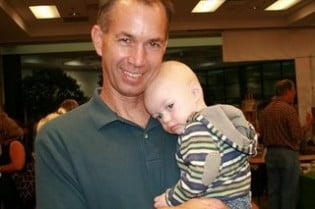
Archie & baby Jack

Both photos by Cheeseslave

What a perfect little face looking up at his Daddy

The morning began with a welcome from Archie, looking handsome, but sad, up on the stage holding he & Deidre’s son, Jack, who is now 8 months old. As a Mom it especially ripped my heart out seeing Jack sleeping in his Daddy’s arms, as Archie tearfully spoke about Dee and last year’s conference, and how emotional this day was for he and Dee’s family. Archie: “I can’t think of anything more sad than a new mom dying before holding her first child.”  (Read about how Archie was able to keep Jack on breastmilk throughout his babyhood.)

As God always does, He has taken a heartbreaker and brought some good from it. To honor Deidre’s memory, Archie and many others (most who also knew and loved Dee) took on the huge job of putting on this conference, in hopes of getting the truth about traditional food out to more people – which was Dee’s passion.

They all spoke my language!

It was great spending the weekend with Ann Marie from Los Angeles, and Diane from Maryland, my friend Julie who lives near Kalamazoo, more old friends, and some new ones too – many people introduced themselves and said they read my blog!

The best part was that everyone there “spoke my language” – not one person thought I was a weirdo. (Well, maybe they did…?) Normally I’m the only one (or one of a very few) in a room who care about the perils of things like GMO’s and pasteurized dairy or who know the benefits of healthy fats and pasture-fed meat, this day was so refreshing!

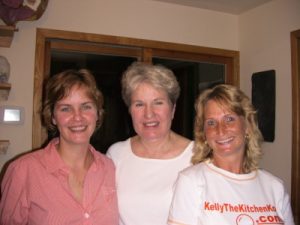
Kelly, Julie, Valerie, Catherine, Diane, Ann Marie

BBQ at the Farmhouse

Then, GET THIS, because Ann Marie & I helped Archie a little with promoting the conference, he was sweet enough to invite us to dinner that evening at an Ann Arbor Bed & Breakfast in a neat old farmhouse where the speakers were staying. We were able to meet Dee’s family (visiting from New Zealand), talk with the speakers and other friends of Archie’s, and even get our picture taken with Sally Fallon:

Miss photogenic herself is on the left (Ann Marie), Sally Fallon, and then me, miss NOT photogenic…  Oh well, I’m still publishing the dumb thing because it’s a pic with SALLY!

Guess what Sally suggested?

OK, so I’m actually drinking a cup of hazelnut coffee as I write this, if you want the truth, but Sally was telling me what a number coffee does on your adrenals. I asked, “Can I drink decaf?” “Well, it’s better if you drink a dandy blend or something like that…” Just the night before at dinner, Ann Marie was giving me the same spiel. Oh fine, I’ll read up on my adrenals, but that’s as much as I’m promising right now. At least I only drink it 3-4 times a week. Talking to Karen Lubbers at dinner, she told me she drinks coffee three times a day, and she’s healthy! (Another reason to love her: she also likes chocolate.) Yes, I know, I sound just like someone trying to justify their diet pop or some other nasty habit…

I learned so much!

If you’re wondering about all the amazing talks I heard there and what I learned, over the next week or more I’ll be posting all of my notes.  (See above links.)

If you were at the Deidre Currie Festival, please comment below and tell everyone about your experience there!

Check out the new KITCHEN KOP REAL FOOD INGREDIENT GUIDE: only $5!

DON'T MISS NEW POSTS:

Subscribe in a reader
or Subscribe via e-mail for free blog updates.


Learn more from the COMMENTS BELOW - join the conversation!

{ 8 comments }

Sally Fallon gave the first talk at the Deidre Currie Festival. I took notes like crazy, trying to catch everything I could to share with you, but they ended up very hodgepodge. If I confuse you, if you have something to add, or if there’s anything you’d like to know more about, just comment below.

photo by Cheeseslave

Here is Sally’s cookbook, which I love – mine is falling apart: Nourishing Traditions: The Cookbook that Challenges Politically Correct Nutrition and the Diet Dictocrats.

Sally Fallon: Dirty Little Secrets of the Food Industry/The Makings of the “Good ol’ American Breakfast”

This usually begins with a bowl of processed breakfast cereal:

  • A multi-million dollar business. There is 1 or 2 cents of grain in each box, which costs about $4-5 each.
  • The extruder machine uses high temperature and high pressure to make cereals into little O’s or flakes or other shapes. Billions of boxes per year are sold, but yet there are no studies in animals or people on the effects of extruded foods. (More info in the link above on breakfast cereals.)

Pasteurized milk

  • The milk industry continues to insist that there is no substantial change in milk when it is pasteurized, no more allergens, and that it is no more difficult to digest. (See Real Milk site.)
  • Cows at a confinement dairy farm are fed soy, old donuts, chips, or any other waste product. They never leave their cement floor, when all the while, right outside their barn is often the very best food for them: grass.
  • Average lifespan of cow in confinement is 42 months vs. 10-15 years for a cow raised on pasture.
  • What a breastfeeding mother eats always affects the milk her baby drinks, so why would it be any different with a cow? Cow’s milk quality is extremely sensitive to the diet of the mother.
  • Cows pumped full of hormones have high production, but low quality milk – they need to be milked 3x/day and the ratio of nutrients per volume are very low.
  • This type of milk DOES have to be pasteurized – otherwise it is too risky for us to drink.
  • Pasteurized milk is very sticky, so the big milk tanker trucks are cleaned with very caustic chemicals, and this residue ends up in the milk.
  • Drinking milk raw builds immune system and helps us to absorb B12.
  • Great chart on the benefits of drinking raw milk: the destruction of built-in safety systems by pasteurization. Also, see my post, the benefits of raw milk.
  • These days we have all we need to keep raw milk safe: managed rotational grazing keeps pathogens down, herd testing, and refrigeration.
  • Raw milk is the only food with its own built-in safety mechanisms. Claims that it is unsafe would not hold up in a court of law.
  • The milk “problem” was solved by long ago by outlawing inner city swill dairies, the certified milk movement ensured clean raw milk, and increased consumer access to refrigeration… NOT by milk pasteurization laws, but proponents of pasteurization take credit for it anyway.
  • Raw milk digests itself – our body doesn’t spend an ounce of energy on digestion – it’s own enzymes go in full gear. However, pasteurized milk calls on the body to digest it.
  • Most common testimony from families who begin drinking raw milk: “We can’t believe the difference in our child! We had a child who couldn’t sit still, was always crawling the walls and having temper tantrums. We didn’t like our child much, until we switched to raw milk. Now we have an angel, he behaves himself, and we enjoy being with him.
  • Skim milk powder is added to ALL 1% & 2% milks and is oxidized – it forms nitrates and MSG, but it is not required to be on labels. (Read more: Healthy Milk options.)

Eggs

  • Typical supermarket eggs come from a farm with as many as 65,000 chickens under one roof – it is toxic to go in there, people have to wear masks when they go in to pick up the dead chickens.
  • The typical American has no idea of the change in how chickens were raised in the last 50 years. All this commercial meat is coming from diseased animals.
  • An industrial egg is pale in color, and they feed dyes to the chickens so their yolks have more color. (My post: eggs are a superfood!)

Misc.

  • Traditional diets are very rich in minerals and fat soluble vitamins – found in all the foods we’re told not to eat: liver, organ meats, butter. People in traditional cultures had beautiful straight teeth, round faces, splendid bodies and were immune to all diseases found in civilization today.
  • In a survey of children with developmental delays and learning disabilities, 95% had dental deformities, but only 10% of the kids with no problems had dental deformities. Why does this matter? The teeth tell the tale – when the teeth are straight, all else is functioning right and built properly in the body.
  • Vitamin D is “on top of the hit parade” right now and you hear things like, “Can you believe this? Vitamin D is so important, but you can’t get it from food, you have to take supplements”. But Vitamin D IS in lots of foods – it is found in meat and eggs of animals out on pasture and eating the right foods themselves. (Also found in cod liver oil!)
  • The food processing industry would not exist without artificial flavors, it would be bland at the least, and sometimes downright gross. Much of it would be inedible without MSG. In late 60’s things like canned soups, bouillon cubes, dehydrated soup mixes all became popular, and America is hooked on it now. Many don’t realize that you can make better tasting, more nutritious soups and stocks with real bone broth and fresh herbs. (The cookbook above can teach you all that.)

Sally told a story about an overweight woman on a plane: it was suggested to her that maybe she needs more healthy fats in her diet so she feels full. The woman started to cry, “I haven’t felt full and satisfied in years.” You do not have to deprive yourself on this diet, most find it liberating and indulgent.

More notes from the talks on Saturday will be coming later this week. :)

Many more topics along the right in the sidebar.

Check out the new KITCHEN KOP REAL FOOD INGREDIENT GUIDE: only $5!

DON'T MISS NEW POSTS:

Subscribe in a reader
or Subscribe via e-mail for free blog updates.


Learn more from the COMMENTS BELOW - join the conversation!

{ 12 comments }


I wanted to update you on my exciting weekend ahead at the Deidre Currie Conference in Ann Arbor, Michigan! Read more about Deidre’s story – it’s heartbreaking and beautiful all at once. There you’ll also find a new link to a video with Archie talking about how he and Deidre met, the day Jack was born and Deidre passed away, and why he decided to plan this Festival.
If I’ll have an internet connection, and assuming anyone cares (doubtful!), I plan to use Twitter to update you throughout the weekend on all that is going on. Just scroll down at my site for the Twitter updates. (Or refresh your page if you leave it open.) There’s a good chance I’ll get to MEET the speakers, and I’m giddy at the possibility, so I’ll keep you posted!

Since we can’t be in both places at once, Anne Marie/Cheeseslave & I are teaming up to bring you all the information we’ll learn while there. She’ll attend and write posts on the talks by Jerry Brunetti & Natasha Campbell-McBride; I’ll attend and write posts on the talks by Sally Fallon & Karen Lubbers.

Stay tuned – Monday I’ll have a post ready with all sorts of good stuff for you!

FREE KITCHEN KOP UPDATES – DON’T MISS ANY NEW POSTS:
Subscribe in a reader or Subscribe via e-mail

Add to Technorati Favorites

Information found on the Kelly the Kitchen Kop site is meant for educational and informational purposes only, and to motivate you to make your own health care and dietary decisions based upon your own research and in partnership with your health care provider. It should not be relied upon to determine dietary changes, a medical diagnosis or courses of treatment. Individual articles and information on other websites are based upon the opinions of the respective authors, who retain copyright as marked.
© Kelly the Kitchen Kop. All rights reserved.

Check out the new KITCHEN KOP REAL FOOD INGREDIENT GUIDE: only $5!

DON'T MISS NEW POSTS:

Subscribe in a reader
or Subscribe via e-mail for free blog updates.


Learn more from the COMMENTS BELOW - join the conversation!

{ 0 comments }

Update 9/15/08: read all about the Festival here, along with my notes from the talks that day.

Last fall, my friend Kathy spoke at a Weston A. Price conference near Detroit, organized by a woman named Deidre Currie. At the time, Deidre was pregnant with she & Archie’s first child. Sadly, it wasn’t long after the conference that Deidre passed away, just after giving birth to their baby boy, Jack. This fall, her husband is organizing the Deidre Currie Festival in Ann Arbor, Michigan to honor her memory. He has some great speakers lined up to teach us more about nutrition and traditional foods, which Deidre was passionate about.

***Archie talks about he and Deidre’s story in this video.

2 FREE TICKETS TO THE DEIDRE CURRIE FESTIVAL!

Archie has graciously offered to give away 2 free tickets to anyone who signs up the most friends for the Festival.

HERE’S HOW:

  • Tell all your friends!
  • Have them register online BEFORE 11:59 pm on September 1st, 2008
  • When they register, be sure they put your name in the “Referred by” box, so we know who wins the free tickets.

YOU ONLY HAVE 2 WEEKS AND THE CONTEST IS OVER!
FESTIVAL DETAILS:

  • When: Saturday September 13, 2008
  • Where: Ann Arbor, Michigan
  • Cost: $45 (Includes ALL speakers)
  • Speakers include (check out this line-up!!):

Sally Fallon, President of the Weston A. Price Foundation, Author of Nourishing Traditions: The Cookbook that Challenges Politically Correct Nutrition and the Diet Dictocrats

Dr. Natasha Campbell-McBride, author of Gut and Psychology Syndrome: Natural Treatment for Autism, ADD/ADHD, Dyslexia, Dyspraxia, Depression, Schizophrenia (watch for a post about all this coming out soon)

Jerry Brunetti, one of nation’s foremost experts on food, farming and health

Karen Lubbers, Michigan farmer, teacher, environmentalist

I’D LOVE TO MEET YOU THERE!

If you live anywhere nearby (or even if you don’t), I hope you will think about coming. If so, come find me and introduce yourself! (Registration link is below.)

As a matter of fact, Ann Marie (“Cheeseslave“) and I would like to get together with you at the Holiday Inn – we’re excited to meet some of our readers!

If you can join us, please email so we can let you know the time and place once we decide, and so we know who to look for.

IF YOU CAN’T COME, WE’LL GET THE SCOOP FOR YOU

We’ve gotten special permission from Archie to take notes while there and post them on our blogs the following week…stay tuned!

—Read more about Archie & Deidre’s story and you can register at this link, too. Or click over to Cheeseslave’s blog where she has more on their story and some beautiful pictures.

If you’re unable to come (and even if you are):

Will you consider a donation to help Archie? He’s been through so much and has many financial burdens since Dee passed away. Being a single Dad, he works quite a bit to make ends meet, and he’s hoping to move he and Jack back to New Zealand after the conference so that Jack can grow up around Deidre’s family, but moving is costly. If you’d like to send a donation, send it to:

Archie Welch, P.O. Box 690, Clarkston, MI 48347

Lastly, Cheeseslave (Ann Marie) & I have worked together to get the word out about the Deidre Currie Festival – here are other bloggers who have also joined our efforts (to thank them, how about popping over to check out their site?):

  1. Peaceful Acres
  2. Urban Homemaker
  3. One busy Mama
  4. Corganic
  5. The Nourishing Gourmet
  6. Bryan at Stay Healthy/Enjoy Life
  7. You’re next! Email to let us know that you’ve linked back here and we’ll add your site to our list. (Ann Marie: inasnit@gmail.com or Kelly@Kellythekitchenkop.com)
  • Have you heard of all the benefits of coconut oil (as explained in Sally Fallon & Mary Enig’s book, Eat Fat, Lose Fat: The Healthy Alternative to Trans Fats) and do you know where to find the best deals?
  • Other books I love
  • Do you still use your microwave?
  • (Many more topics & recipes along the right in the sidebar)

    Check out the new KITCHEN KOP REAL FOOD INGREDIENT GUIDE: only $5!

    DON'T MISS NEW POSTS:

    Subscribe in a reader
    or Subscribe via e-mail for free blog updates.


    Learn more from the COMMENTS BELOW - join the conversation!

    { 0 comments }

    Clicky Web Analytics