
Does Kefir Soda Have Alcohol?
If you make your own fermented beverages, especially if you make homemade kefir soda, you may wonder if it has alcohol in it, and if so, how much? You won’t believe all the steps it took to finally get a solid answer on this question, thankfully my brother-in-law Kevin, who is a chemist, jumped in to help…
First, to make sure we’re all on the same page:
- Did you see this post? How and Why to make kefir soda pop – it’s simple and full of healthy probiotics! (We also take this probiotic daily to keep our immune system strong and our gut healthy.)
- And you’ll need to know where to get kefir grains. (Remember there might be a funky delay when you click into that page.)
- If you're wondering, here's how and why to make dairy kefir.
- Lastly, are you wondering what in the world are kefir grains? Wikipedia: “Kefir grains are a combination of bacteria and yeasts in a matrix of proteins, lipids, and sugars. This symbiotic matrix forms grains that resemble cauliflower.” That clears it up nicely, eh? It goes on to say, “Today, kefir is becoming increasingly popular due to new research into its health benefits. Many different bacteria and yeasts are found in the kefir grains, which are a complex and highly variable community of micro-organisms.”
So why does it matter, anyway?
This past summer I took some of my bottled kefir soda when we were meeting my family (siblings, nieces & nephews) at Mom’s pool. Our kids love our homemade pop and I couldn’t wait for the family to try it, hoping I could get them, by some miracle, to start making and drinking this instead of pop. (Regular soda pop is full of the heart-killer sugar, high fructose corn syrup, as well as other mystery chemicals to add fizz, preservatives, etc. Scary stuff! Note: artificially sweetened soda pops are just as bad! Read more: Are you addicted to liquid candy?)
They weren’t impressed.
First they couldn’t believe I was making homemade soda pop in the first place. Then they couldn’t get over the alcoholic smell, and joked about what Aunt Kelly was doing to all the nieces and nephews, we had some good laughs over that! It does have a little fermented taste and smell (because, HELLO!, it’s fermented!), but not a lot in my opinion. Next, they thought it was a little bland. Keep in mind that most of them drink Mountain Dew or other sodas regularly, so a drink that’s not overpoweringly sweet is going to taste more bland to them. As I said, my kids loved it! (But they don’t even get juice regularly, let alone pop, so they thought it was a big treat – don’t let the secret out that it’s actually good for them…)
Many have speculated about the alcohol content in kefir soda pop, but I wanted to know for sure so I could tell my family, lest they think I’m turning my kids into boozers. My step-Dad, Carl, was convinced it had at least 4% alcohol, but online most sources guess it at more like 1%.
So I was going to figure this out.
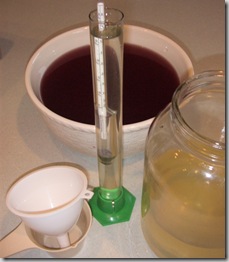
I started out on my own, assuming it couldn’t be that tricky. After some internet research, I bought a hydrometer at the beer-making store, and made another trip when I realized I didn’t have the right container to float it in. Then I had the right equipment, but when I was finally ready to take my readings, I realized our cute little 4 year old had broken the hydrometer while looking it over one day. So it was back to the beer-making store for another one (thankfully they’re only $5) and I could finally get started. (See the hydrometer floating in this container?)
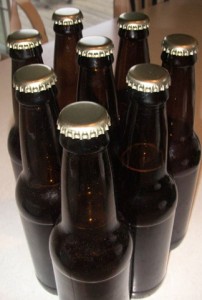
I got a new batch of kefir soda going for my “before” readings, and the next day I finished a batch, bottled it and let it set like normal before I took my “after” readings. But my results weren’t clear.
Thankfully I had someone to call…
My sweetheart brother-in-law, Kevin, is a chemist. Not only that, lucky for me, he also brews his own beer now and then. Kevin had no idea at the time what he was getting into when I first called him about this, but even at about 50 emails into it, he was still saying things like, “I'm having a fun time with this little chemistry experiment!”

He did some research and found a formula for me to follow, which brought me back to my days in chemistry class. He explained that before I could get an accurate “after” reading, I had to boil it down to get rid of the carbonation. But then I had to get it back down to the right temperature, and be sure I was measuring in the same amounts of liquid, so I was comparing apples to apples. I did all this, but my readings still weren’t clear.
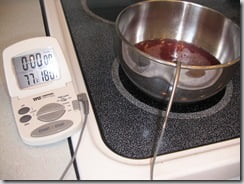
So Kevin decided he would like to test this out for himself.
Now, all thanks to him, and after a lot more pooping around that I don’t want to bore you with (as if you’re not sleeping already, although I actually think this is fun!), we finally have a solid number:
The amount of alcohol in kefir soda pop, based on my recipe:
0.64% alcohol by volume
Woohooo!!! Not even close to 4% alcohol, it's more like the amount that's in a non-alcoholic beer!
Kevin’s comments on the taste: “The soda itself wasn't bad. I definitely taste the yeast, and maybe that's what your family is tasting that makes them think of beer.”
Now for you ‘details’ people…
For those of you who are more detailed oriented like I am, I’ll share a few of the email exchanges between Kevin & I. Keep in mind I’m only sharing a few random parts that I thought might be interesting to you, so if something doesn’t jive just right, it’s my fault, not Kevin’s, and it’s also very late right now as I edit this, so cut me some slack.
Kevin:
Okay, I got home tonight and played some more. After another day, my soda was well carbonated. I'll call it “medium” on the carbonation, not quite a can of coke, but plenty for my tastes. I took a sample, heated it in the microwave to get rid of the carbonation, then cooled and measured specific gravity. I get 0.64% by volume (0.50% by weight). Not bad. I think it just took a while for the yeast to kick off. Not sure why, but that happens with beer sometimes too, so it's not surprising.
So I did some investigating and calculating. Here's what I have. This all assumes that little or no alcohol is formed during the initial kefir grain / sugar water fermentation phase. I'm not sure how good of an assumption this is, but my process never formed any alcohol during this phase, and from your spec. grav readings, it doesn't sound like yours did either. So, I assume that the alcohol is only formed in the bottle, and I assume that our final fizziness is about the same as a can of coke (3 volumes of CO2 added per can, according to a couple internet sources). Then, from the chemical reaction that the yeast uses to make alcohol, I know that we get 1 CO2 for each 1 alcohol molecule. This means, that to get 3 volumes of CO2, we would get a MAXIMUM of 0.7% alcohol by volume. Sorry, does that make any sense? Basically, this says that if your Kefir soda is equal or less fizzy than a standard can of coke, then you have less than 0.7% alcohol.
Me:
Just to clarify, you’re saying that the more carbonation, the more alcohol then, right? So should I warn my readers that if they let it set on the counter longer than 18-24 hours, not only are their chances of a kitchen mess (and explosion) more likely, but also their alcohol content will also go up?
Kevin:
You are correct, more carbonation = more alcohol. I would suggest that your readers stick with your initial suggestion and not let the soda stay in the bottle on the counter more than 24 hours. I'm afraid they might explode some bottles if they let it go for 2 days.
A final note:
When I was leaving my bottled kefir soda on the counter for 24 hours, it was fizzing out the top when I opened it and wasting a good share of the soda. I cut it back to 18 hours and this was just right. It still had a good fizz, but most of the time it didn’t go all over.
Now that we know this kefir soda pop is fine for the kids, the next thing I’m making is a nice fermented drink for Momma – I’m ready to try a shot at making wine coolers!
Kevin, are you up for it?
More you might like:
- An oldie but a goodie…What do Christmas pictures of our home have to do with Health & Nutrition? What does any of it have to do with size 7x underwear? I connected those dots all right…oh yes I did. 🙂




Phumtas Tubtim says
Does sugar content effects alcohol percentage?
If I use more sugar in the process and let it sit on the counter at room temp longer in both jar/bottles it will produce more alc/vol and getting a higher chance of exploding.
KitchenKop says
Yes sugar does affect it, but I don’t know exactly by how much.
Kelly
Suzi says
Hei Kelly,
At what temperatures did you ferment the kefir for 18-24 hours.
we live in the tropics and out temperature are around 29-30 degrees
KitchenKop says
Suzi,
There’s more info at this “how to make it post”: https://kellythekitchenkop.com/how-to-make-kefir-soda-pop/
But basically it’s at room temp, about 70* F.
Kelly
Angela says
Could you please explain to me how your getting an alcohol % using a hydrometer.
KitchenKop says
Angela, this was a few years back, so I don’t remember the details now, but I’m sure an internet search could help you out, sorry!
Kelly
Bernard Smith says
An hydrometer measures the density of a liquid compared to the density of water. This measurement is called specific gravity (SG) The SG of water is given a conventional number of 1.000 any reading above 1.000 is more dense and a reading below 1.000 is less dense. A solution of water + sugar is more dense than water and say, 1 lb of table sugar dissolved in water to make 1 gallon will give a reading using a standard hydrometer of 1.040. If your fruit juice is juice extracted from fruit with no added sugar it is likely to have an SG of about 1.045 – 1.055 depending on the fruit.
If the kefir is fermenting this juice then the conversion of some of the sugar to alcohol and carbon dioxide will reduce the SG (the density). The difference between the SG before and after can be converted into an approximation of the % alcohol in the solution (you multiply the difference by 131).
So to determine the amount of alcohol you have take a reading of the SG immediately after adding the kefir to the juice and a reading when the “soda” is ready for drinking. Best way to take a reading is to FILL the sample cylinder right up to the top and then carefully insert the hydrometer. This ensures that all the foam will be expelled. read the hydrometer. Because of other compounds that may be in solution that can affect the density you might want to treat the reading as approximate (+/- 2 points). Personally, I don’t think you really need to heat/cool the liquid. I would expect that the kefir can ferment between 1-3% alcohol by volume (between say the equivalent of 4 – 12 oz of sugar in a gallon of fruit juice, when we assume that fruit juices have about 1 lb of sugars in expelled /expressed juice with absolutely nothing added.
KM says
Oh man, I’ve been searching for some time and your article is so far the closest detailed description i’ve read on the process of measuring. Do you think you could ask your bro in law and share the technique? Is the pre-measurement right when you mix the water and sugar (before the initial fermentation)?
KitchenKop says
KM,
Sorry but it’s been so many years now, I don’t think he’d even remember. You may just have to play around with it?
Kelly
Joanna Manning says
So, I’ve had this batch sitting on my counter for four days. It did not seems fizzy when I shook the bottles. But I tried it this morning and it smelled and tasted like it had alcohol in it. I’m guessing I have more than .7%. So, I guess I better go drink this batch before my kids get to it. 🙂
Stacy says
From what I’ve read, swing top style jars with rubber gaskets naturally vent to allow off gassing. This is likely why you’ve never struggled with exploding jars. The pressure builds up and and escapes out the rubber seal. Do a web search for “sauerkraut challenge” and this will yield some information about various fermentation bottling methods.
Stacy says
Sorry this was supposed to show up as a reply. I’m having some issues with the reply page.
KM says
Don’t know how accurate that is, as my swing top bottle recently exploded after leaving it at room temperature for just over 24 hrs. Thankfully it was placed on the ground in my kitchen next to a metal container which kind of blocked the shards from going anywhere, so no one got hurt. Bc it was a thick bottle it mostly broke into 3-4 clean pieces. The floor was a big puddle of very alcohol smelling kefir water though!
Karyn Hunter says
Did you ever made the wine coolers as suggested in this post?
kitchenkop says
Karyn,
No, but I’d still like to get back to that project one of these days!!!
Kelly
J says
If you use flip top bottles with glass that can withstand the pressure, you can “burp” them and ferment longer to get out more of the sugar without it exploding ?
Cynthia says
Thank you for tracking all this down. It was very helpful for me. I was on two antibiotics, now just one, following a post-operative infection. I read a study that kefir (probably milk) helped lessen the side effects of antibiotics and even improved the drug’s efficacy. I was inspired by the idea of all that good bacteria in the kefir helping root out the bad.
At the same time, I was warned by the pharmacist against even hidden amounts of alcohol. So, what’s a person to do!
Your post helped me to brew water kefir with the least amount of alcohol possible. I ran it by my surgeon, who’s a fan of kefir, as it turns out. I’ve been mostly side effect-free, and have had no interaction issues between any alcohol in the kefir and the antibiotics.
So, thank you for going through what you did for your experiment. I had a hard time finding information, and your post helped me a great deal.
Jesse says
Hi,
I read this with interest and would like to point out some additional information. I am new to kefir soda and kombucha but have been doing home brew beer for some time.
Firstly, fruit juices do contain some alcohol. This varies on the type of juice and whether it is preservative free. Apples and grapes tend to have naturally occurring yeasts on their skins. Combined with their naturally high sugar content this leads to high naturally occurring alcohol content in these juices. I would speculate that the wild yeasts in grape juice may have caused the change in the yeast population in some commenters’ kefir. When I use fruit juices in my kefir soda I boil them and then allow them to cool before adding some water then adding the kefir.
Secondly, kefir is not simply yeast. It is a symbiotic culture of various yeasts and bacteria. In particular you should have aceto-bacteria and lacto-bacteria in your kefir (search for common bacteria in kefir). These produce acetic acid (vinegar) and lactic acid (the sour taste in yoghurt) respectively. This would affect the amount of sugar available to the yeasts (which produce the alcohol). They would also affect your hydrometer readings since they rely on the density of water which changes based on the sugar content. I would fully expect that kefir soda has less alcohol than your measurements suggest so long as it has the characteristic sourness resulting from the acetic and lactic acid.
I did perform an interesting experiment. I set aside a small amount of wort (unfermented beer) and added kefir instead of yeast. It fermented a lot like beer and I certainly noticed the alcohol content (there was some sourness which was nice). The South africans make a beer a bit like this and a lambic is a european beer which has some wild yeasts and bacteria. I suspect though, that the presence of hops suppressed the bacteria somewhat, leading to the much higher alcohol content. This is in fact the reason hops is added to beer – as a preservative.
Anyway, take that for what you will. The bottom line is I haven’t performed any more accurate testing than you but I happily give it to my kids. I believe your best bet to get a more accurate reading would be to find a chemist with access to a spectrometer – probably at a University. They would be able to account for the non-alcohol by-products of your fermentation process.
Pam says
I think this is great, but I was just thinking, doesn’t alcohol evaporate when you cook it?
Joshua Jarman says
I think the results VARY HIGHLY depending on the sugar content of your culturing medium, the activity of and amount of your grains per medium volume, and the overall fermenting time and temperature.
Kefir d’Uva made from grape kefir grains grown in straight undiluted grape juice, can be very very potent. If I do a 2 day airlock ferment at room temp, then bottle and burp 3-4 times a day in cleaned out gt kombucha bottles on the counter for 2 more days it hits me much much harder the a glass of wine at the same volume. So at 4 days it has more alcohol then most red wines, add another 2-3 days on the counter to that, and whew it will knock your socks off and i’m no light weight. Of course that is grown in straight grape juice so it has much more sugar to convert to alcohol.
Joshua Jarman says
Sorry, I meant to start the above comment with a huge THANK YOU for doing actual measurements and experimenting on all out behalf. I know many of us long time ferments often wonder things like this but don’t do much to actually answer the questions with hard data. 🙂
Also, I give my girls all the various types of kefir I ferment except the really hard stuff like Kefir d’Uva. Although they both typically prefer the taste of the various Kombucha’s and Jun’s I make, they also really like the taste of the kefirs. I personally feel any small amount of alcohol is outweighed by the huge amount of probiotics they receive and they receive. I’d never in a million years give them commercial soda, bleck!
KitchenKop says
Yep that makes sense! It can definitely be powerful, and not just alcohol-wise, did you see my posts on when it exploded all over my fridge?! (Google “kitchen kop explosion” & you’ll find it.)
Kel
Catherine says
I found this with a google search re alcohol in water kefir. Why? This morning I was putting the ready to drink kefir in a bottle in the frig and having more than the bottle would hold, drank the extra – about 1 cup. And no it was not as fizzy as a can of soda. Now I am feeling it. I don’t drink alcohol at all, haven’t in 30 years and am very sensitive to it. If I take a tiny sip of someone’s drink I feel it. The water kefir hit me the same way. I wouldn’t recommend this for anyone with a problem or other sensitivity to alcohol. For me I’m sticking to a small glass in the evening with food.
KitchenKop says
Hi Catherine,
Interesting, yes it certainly has some, but not much.
Kelly
Patti says
I would like to bring some of my Kefir water up to 3% for a feel good beverage. Any ideas.
Deborah says
Thank you for having the patience and ability to nut this out. I like mine what I considered as very fizzy, but only once has it come over the top when opened so I don’t think its as fizzy as yours. Its nothing as fizzy as coke (which I don’t like both because of its sweetness and fizz incidentally). But I will remember, more fizz, more alcohol 🙂 Thanks again a great read, I never got that far with my chemistry classes. I regret it now LOL
I_Fortuna says
If one is just looking for probiotics then milk kefir is a better choice and leaves a clean taste in the mouth. It is easy to make and easier to take care of in my experience. It has about 3 times the probiotics of probiotic yogurt and at least twice as many as water kefir. I tried water kefir and it was o.k. but I was the only one who drank it. We are diabetic and we prefer the milk kefir as the lactose (sugar) is reduced to nearly 0 the longer we let it ferment. (24 to 36 hours).
I have not noticed an alcohol content.
The well-being felt from probiotics may be a great deal from the calcium, B vitamins and other nutrients our bodies are starving for. Since we have started kefir, we both have lost weight and feel tremendously better. There are a number of other things that it has helped along with noticeable softer and healthier skin. All the nails on my hands have grown out and are hard as rocks, not brittle. I can imagine how it is benefiting our bones.
Other factors that have helped us are sprouting beans and legumes before cooking to rid them of phytic acid which blocks nutrients. Using sprouted flour and non wheat flours for baking and leaving our dough for long proofing times (up to 24 hours). Although we are not celiac sufferers, gluten blocks vital nutrients from being absorbed by the body and can lead to various other illnesses auto immune diseases. So, I think it is important to let all those good nutrients be utilized.
Erin says
If I just do the first ferment, does it have alcohol? In the post it says no alcohol, probably, is created in the first ferment. I don’t have the right bottles, and I don’t care about fizziness (in fact, I don’t like fizziness). I just want probiotics. Thanks!
Lumen says
Thanks for posting this. I really enjoyed reading it. I just got into Kefir. Is there anyway to stop the process before any alcohol is formed? Also does milk Kefir also contain alcohol?
I_Fortuna says
I leave my kefir on the counter sometimes over 48 hours. I have never had anywhre near enough carbonation for an explosian and I am beginning to think that is just a myth. I use swing top jars with rubber gaskets. I let it sit longer to lessen the sugar content because we are diabetic, and I particularly love the taste and it has just the right amount of carbonation. Hubby says it tastes like wine. He doesn’t drink. I say it tastes like champagne, I imbibe once in a great while and I find kefir a great bubbly sustitute. I love it and will continue to make it throughout the summer. Your blog was interesting and the alcohol content is really very nice. I tend to think maybe milk kefir or yogurt would provide the same benefits as water kefir without the trace alcohol for babies. Not sure about the alcohol content of milk kefir.
Cynthia says
Probably not a myth. I have to burp my bottles twice a day or I get “champagne” all over the ceiling. I notice it’s worse when I’m doing a secondary ferment with something that has pulp. The worst was mandarin orange. A lovely mess, but very tasty. Twice a day burping, or taking it outside when I forget, takes care of it all.
Pam T. says
Grape juice can make wine very quickly so I don’t do grape for more than a second ferment and not for long. Someone mentioned getting ‘drunk’. Did you get your banana answer? I was told that water kefir has no more alcohol than a ripe banana. Now I’ve had someone exclaim that they didn’t know a banana had alcohol. I want to learn more about how the body breaks down foods and turns into alcohol. It’s interesting to me. We also give water kefir to our children and we all do fine. None of us have gotten drunk but we don’t drink a ton at a sitting.
Commenter via Facebook says
High five, Kelly!
Commenter via Facebook says
My son has been drinking it daily since that age or earlier. I generally water it down, just like I would with juice, but we haven’t noticed any ill effects.
Commenter via Facebook says
We have never had water kefir, but my daughter was 9 months old when she started having little sips of kombucha which also is fermented. They’d had to drink a lot to notice effects of alcohol and they would be sick before then.
EJ says
Hi Kelly,
Is it OK to give water kefir to a 16 month old baby? Provided it has a bit of acohol.
How old were your kids start drinking them?
KitchenKop says
Good question, and I’m not sure. (Can’t remember how old my youngest was when we started making it…) By the looks of the date on this post he was about 4. I would think small amounts would be fine and the beneficial probiotics would be good for them!
Watch my Facebook wall and I’ll put this question up within the next few days and we’ll see what others think.
Kelly
Dara says
Good to know! We love our kifer soda!
Commenter via Facebook says
I’m sorry I just don’t think it is right giving any amount of alcohol to a child. There is other ways of getting the good stuff into them.
Commenter via Facebook says
Thank you for doing this experiment. I actually bought a hydrometer, but could never figure it out. I give it to our 3 year old, so I wanted to make sure it was safe. I do a 18-24 hour ferment, then a second ferment with fresh fruit or juice. I think I’ll cut that back now because ours is really fizzy!
Commenter via Facebook says
That’s why I’ve never liked the taste of kefir…I don’t drink alcohol and don’t like the taste.
Commenter via Facebook says
mine tasted like that too. I quit making it, it was too much
Commenter via Facebook says
Haven’t tried it yet, but I certainly hope so:)
todd fischer says
if you turn apple cider into hard cider, and then you freeze the hard cider and draw off the alcohol, its called apple jack, im wondering what % of alcohol it is?? any ideas or suggestions??
u can’t have a still, but there is all kinds of cold weather to freeze hard cider, and alcohol doesn’t freeze! so throw away the solids and frozen water of the hard cider!
remember to drink ethal not metyl alcohol !! its legal to have a still to make ethal alcohol for your gas tank, not to drink, most americans don’t know that!! some of the guys i know, get tanked up!!
todd fischer says
i ask a 100 yr old man, whats the secret to living so long?
He told when he wakes up in the morning from bed, he takes a shot of brandy and waits 10 minutes to see who he feels. if he feels fine, he goes about his day! if not, he has another shot of brandy and waits 10 minutes to see how he feels! if he feels fine, he goes about the day, and if he doesn’t feel just right, he has another shot of brandy, waits 10 minutes and if he doesn’t feel better by then, he goes back to bed and gets some more sleep!! it has worked for over 100 yrs for him, and he isn’t dead yet! that’s more then i can say about alot of people i once knew who died !
think about that??
do you think women should have children over 35? NO! if they have had that many children, they need to stop right away!! LOL !!
there is a woman having having a baby every 60 seconds in America, we need to find to this woman!! LOL!!
Jeanne says
The boiling point of ethanol (the alcohol that is produced in this process) is174 degrees Farenheit. You could destroy the carbonation without evaporating the ethanol by heating it to 170 degrees for a period of time.
Jeanne says
Alcohol has a much lower boiling point than water. Boiling the kefir pop reduced the actual alcohol content substantially. The hygrometer measurement post-boiling does not accurately represent the real percentage of alcohol in the pre-boiled product.
Perhaps you could reduce carbonation by shaking vigorously and for a prolonged period. That will eventually remove the carbonation, but it won’t kill any remaining kefir granules, so it will continue to ferment and produce alcohol and carbon dioxide. So do the hygrometer reading immediately after the shaking has destroyed the existing carbonation.
Thanks for your interest. Jeanne
Tokaia says
I’d say it’s an alcoholic beverage, depending on how long you let it go for. I made some out of juice, sugar and molasses and let it ferment for five days. The results got me drunk as a skunk!
Vinnie says
I did a batch of water-kefir with molasses, because I’d heard that the kefir does better with the minerals in the molasses than with straight up sugar, and it also got a good kick in about three days. I tossed the batch because I don’t drink alcohol. I’ve seen molasses ferment spontaneously, previously, so I think molasses is just prone to yeasts and probably added to the yeasts in the kefir grains to make a super yeasty alcoholic brew.
Unfortunately my next batch of water kefir was yeasty, too.
A friend of mine mentioned to me that the yeasts don’t like salt water, but the bacteria are okay with it, so I mixed up my next batch with 1/4 c sugar and 1 t salt to a quart of water, and let that sit for 3 days, then strained and tossed that batch and started brewing regularly again. That seems to have done the trick.
KitchenKop says
Vinnie,
Thanks for figuring all that out and sharing here! 🙂
Nicole says
I know this is old post but I just wanted to express my appreciation for the effort on the experiment and I wish I would have run into it 6 mo.s ago when I was really questioning the wisdom of giving it to my 3 year old as it smelled like beer. Many things have changed since that time…a diagnosis of Leukemia 3 months ago for this same child.
I have since then stopped giving it to her for a different reason…with her treatment for Leukemia, she is often neutropenic (the results of a low Absolute Neutrophil Count-the good infection fighting white blood cells), a child with low ANC can ofter get sick from their own bacteria inside their bodies if the ANC gets low enough. So the concern that caused me to stop using it is the extensive list of bacterias and yeasts that water kefir grains have/produce, some of them scary sounding such as some in the species streptococcus… You can check this list out on the Cultures for Health website.
So all this to say, in the back of my mind, there was the fear that some of the bacteria yeast in a compromised immune system could get out of whack and actually have a negative effect on her…any of your readers looked into or questioned this aspect of making home grown water kefir?
I have again considered brewing my own water kefir (have to start all over as I ditched my original grains), because my daughter does not care much for yogurts and milk kefir (store bought) and she LOVED the water kefir. I really want to help keep her gut heath balanced so I could use some advice on this matter, anybody have some insight here?
Kelly says
Great! Do you recall how much you drank of it while pregnant? And did you always do a second ferment?
Thanks, Kelly!
-kelly
KitchenKop says
Sorry but I have no idea, it’s been too long!!
Kelly says
Thanks, Kelly…I appreciate your responses. Have a great weekend!
Kelly says
Great blog post! I do have question…i don’t think this was already asked: is water kefir safe to drink while pregnant? I drink a little bit of it everyday, as well as my
my kids for the probiotic benefits. Thinking about having another baby.
KitchenKop says
I drank it when I was pregnant!
Kelly
Sherry says
Hi,
I was enjoying reading one of your web pages on making kefir soda and in one of your emails to Kevin, I read, “heated it in the microwave”. I stopped. Reread it. Thought, “microwave?? All this work to be healthy and she uses a microwave?!?”
Yes. I was shocked.
So, with your patience for research you may want to try this:
Plant a few seeds in a couple of small pots of soil.
When they become seedlings ( only because you’ll then be able to see results) begin watering one with regular water and the other with microwaved water.
Water and treat both the same, except for the type of water.
Make your own decision after a couple of months.
To healthy living,
Sherry
KitchenKop says
Sherry, I agree with you, that was in Kevin’s email to me. That’s a great experiment to do with the kids, though, thanks!
Kelly
Ray says
I read a few of your Kefir articles, and I just wanted to express my appreciation. This ones really cool! AWesome experimentation. I look forward to integrating water kefir into my lifestyle. I think I’m going to go crazy with the flavors. When I had a Kombucha scoby, I did all types of different flavors, from medicinal herbs to Delicious Addons like Blueberries and Goji Berries… it really transforms the beverage… the flavor, body, the feeling… more than just a sum of its parts.
Elaine says
You said that one container contained .63% alcohol. How much would you say that is per container, say 8-12oz. ? Thanks
KitchenKop says
Hi Elaine,
We didn’t say that there’s 0.63% alcohol in the container, we said that there’s 0.64% by volume/0.50% by weight. I think that’s two different things, but it’s been a while and I’m fuzzy on all this.
You might want to go back and read the details from Kevin in the post, he explains it better.
Kelly
tiffany says
I am happy i found this site. Just a little while ago i phones a friend with a hydrometer to come check mine. Im doing mine differently tho.
I had a serious abundance of grains and juice. I steam juce allot of berries in the summer. Anyway i have a gallon jar half full of water kefir grains, and half gallon of elderberry juice. 2 cups of sugar and the beast lives. Looks like the stuff is boiling in the jar. (lid not tight). This stuff is more like a deer red wine, and boya it has some serious KICK to it. I have a bottle of the stuff i strained the grains out of and placed in the fridge over nite. Its still fizzing, but. Ot a rolling boil type of fizz. But the alcohol smell and taste are wooo weee strong. Working on that wine cooler thing as well. Lol… So.. equal amounts of grains and juice make for a strong drink. Interesrting to see what the % turns out to be.
Kelly the Kitchen Kop says
Tiffany,
You have a gallon jar HALF FULL of kefir grains? That’s a LOT of kefir grains, must be that’s why it’s so strong? Can’t wait to hear what your % is!
Kelly
Jules says
Hi, I realize I’m asking this question two years after this post, but I’m wondering if this experiment would give any clue as to the amount of calories in water kefir? I track my daily caloric consumption and I’ve looked all around the web trying to find the caloric content. I’ve found some speculation, but nothing definitive.
KitchenKop says
Hey Jules,
I have no idea about the amount of calories in water kefir (sorry), but I’m curious why you track your daily calories? I’m sure there are some good reasons for doing it, but when it comes to weight loss, it can cause you to skimp on healthy fats which have higher calories, even though they are burned for energy and boost your metabolism so it comes out in the wash. That isn’t something that is easily tracked when counting calories. Just something to think about, and you may be counting calories for an entirely different reason anyway.
Kelly
Jules says
In an effort to improve my health, I log all my food intake, exercise and sleep into a comprehensive website which also allows notes on how I feel, etc. Weight loss is one of the health goals, but the logging of foods and corresponding calories is usually about monitoring my metabolism, getting enough calories before 4 pm each day (or I overeat at night) and making sure my calories burned is overall more than my intake (encouraging exercise).
If your brother-in-law could make a guess based on his experiment, that would be really helpful to me. I’ve noticed many other people on the web curious to know the same thing. Unfortunately, some people have made up answers that are clearly not accurate.
KitchenKop says
Hi Jules,
I’m sorry, but my BIL would have no idea. He’s not a food scientist, he’s a chemist. I’m sorry!
One idea… Maybe check and see what the calories are in a NA beer, it would probably be similar to that. That’s just a WILD guess, though.
Kelly
Dan in CO says
Alcohol boils at 79C and water boils at 100C. If the soda is below 100C but above 79C it will not boil but alcohol will evaporate…
Mike says
If the sugar converts to alcohol while feeding the grains, and the concerns are either not wanting too much alcohol, or not wanting too much sugar remaining (my concern since diabetic), it seems to me the solution is to reduce the sugar added in the first place, leaving enough to feed the culture, bring about the ferment, but minimizing the alcohol created and the unconsumed sugar remaining at the end of the process. Am I missing something?
KitchenKop says
That makes sense, but I think the problem is that without enough sugar to convert to alcohol, very little fermentation will take place at all, since that process IS the fermentation… Know what I mean?
Paul says
This is so wrong. Why would you assume that there was no alcohol during the first fermentation? You need to measure you SG before any fermentation starts then again after fermentation is complete or once you have fermented for as long as you are shooting for.
KitchenKop says
We DID do before and after readings, I said that right in the post.
Shari says
I am confused by this as everywhere I have read the sugar is converted into fructose, not alcohol. Obviously there is going to be alcohol in fermented things. I just am not sure it is really this high. I never get buzzed off wk, KT yes but from what I have read that is a vitamin B rush. Interesting read though.
Melanie says
Thank you so much for this! I’ve been hesitant to give my water kefir to the kids because it tastes so much like wine to me and just started researching how I can test it. I’ll just trust your little experiment.
KitchenKop says
Julia,
Remember that the longer it ferments, the less sugar that’s left…more alcohol though!
For minerals we just use sea salt liberally, also there are minerals in our raw milk and other real foods. 🙂
Kelly
Julia says
Oh oops, I just snooped around your other categories and just found your drinking water category. 🙂 This is the water filter I just bought: https://www.pure-earth.com/pro.html It’s a countertop reverse osmosis system that uses KDF/GAC carbon pre and post filters. Dr. Mercola recommends pure coconut shell carbon and if possible for it to be acid washed coconut shell, and after doing lots of research and contacting manufacturers I discovered this was the only countertop/portable RO system with all the right specs. So I’m so excited!!! Still working on the remineralization part, though…
Julia says
Definitely not alone! I was just about to buy a hydrometer myself from amazon.com when I was doing more research and came upon your page! Thanks for the info!
I loved chemistry my classes, I got in the 95th percentile on my organic chemistry ACS final comprehensive national exam! You’re fortunate to have a chemist in your family! Big thanks to him for the help!
I don’t know anything about using a hydrometer, though, (and I don’t know anything about alcoholic beverages, either!) so I’m glad I didn’t just buy the hydrometer I saw on amazon.com, now realizing you also need the special container. I haven’t started making kefir yet, I just bought a reverse osmosis water filter and so as soon as I get it in the mail and start getting better quality water then I’ll start making water kefir. But I’m also really concerned about all the sugar as well, as I had cut out all sugar from my diet, other than what comes naturally in fruits. I was looking for something that might “absorb” the sugar. For example, a long time ago I had read of a neat little trick if you have accidentally added too much salt in a stew or soup, etc., you can add some apples (or was it a raw potato?) for a few hours and the apples would “absorb” the excess salt; although now I wonder if the sweetness of the apples was just countering the salty taste perception. I don’t know, I read it a long time ago in some magazine, and just remember them using the word absorb, and haven’t really thought much about it until now wanting to find something magical to take away the sugar in the kefir. Of course, I could do without the alcohol as well. I guess I’ll just have to dilute it down more, but not with juice, that’s just more sugar! I’ll have to water it down. And leaving it uncovered during the 2nd fermentation for no longer than 18 hrs, if I do a 2nd fermentation at all.
Your website has been of help. I want to peruse through more of it and learn as much as I can. I also read a little about your popcorn recipes and that was fun because I was already popping organic corn on the stove top for a long time (it works great for me with just a regular stainless steel pot) and was already thinking of using coconut oil. I tried it and it was alright! It certainly comes out much fluffier.
Can’t wait to get my RO water filter in the mail, and the kefir grains I already ordered and to start growing some microorganism buddies! 🙂 I’m still trying to figure out the best way to remineralize RO water, though. Any thoughts? I read the mineral assay/analysis on the product ConcenTrace and it contains more fluoride than my city tap water, plus arsenic, barium, aluminum, and other things I’m trying to filter out!! But that’s the most popular mineral drops people are using. I wonder if most people know what is in it.
Dr. Mercola recommends Himalayan salt for remineralization of purified water, but then I just came across this website https://naturalhealthnews.blogspot.com/2008/01/salt-may-be-health-scam.html that says Himalayan salt is also loaded with fluoride!! (And I currently use Celtic and Himalayan salts at home). I don’t know what to make of that. I was thinking of contacting the “manufacturer” directly and requesting a mineral assay so I can see for myself. I know there’s a difference between sodium fluoride and calcium fluoride from what I’ve read so far, but given how contaminated our oceans/lakes are (which is where the product ConcenTrace comes from in Utah, and I’m sure there’s some degree of pollution in Pakistan where the Himalayan salt comes from) how does one really know it’s the naturally occurring fluoride? And some experts say all fluoride is toxic to the body at any level and is not an essential nutrient? Anyway, sorry to get off on a tangent, and thanks again for all the great info. Keep it up. There’s much to research and much to learn! 🙂
Rachel says
No you’re definitely not alone 🙂
KitchenKop says
Rachel, I’m glad I’m not the only weirdo! 🙂
Rachel says
Wow thats some experiment lol. My customers often ask me about alcohol content so i now use a hydrometer and check ours regulary. Our personal water kefir is 1.3% after 2 days of second fermentation. I haven’t tested the milk kefir or kombucha yet. Not looking forward to pouring the thick kefir into the hydrometer samlpe tube (will take some washing afterwards! lol)
Alex says
That’s good to hear that the alcohol content was that low. I’m always a little scared to give kombucha to my young nieces and nephews because each batch can vary. But I think as long as you do it right and not let it set, the balance between the bacteria and yeast can keep the alcohol in check.
Reikifeet says
Former partier here, drinking 72-hours-on-the-counter WK… buzza buzza buzz!!! This is definitely an alcohol head buzz rather than a blood pressure dip. I’m actually wondering whether i’ll be legal to drive my kid to VBS in 5 minutes as planned!! LOL
Krista says
So after reading this post and your post on how to actually make kefir soda, sign me up for some kefir soda-making fun! I tried GT’s kombucha for the first time the other day, and was surprised to find that my husband liked it too–he said that it would make a good ‘poker game drink’ as he doesn’t drink. Also, I have been carded in Michigan for trying to order a non-alcoholic beer back in college. Funny thing is, I’m from Ohio, and when the waiter asked to see my ID (I was 19 at the time), I didn’t think anything of it, as you have to be 18 in Ohio to order NA beer. Imagine my surprise (and slight embarassement) when he laughed and said that I wasn’t old enough. 😛
Perhaps I should start selling kombucha tea where I work as a massage therapist, after reading that it has relaxed people’s shoulders–less work for me! 🙂 Although, I wonder if I would then need a liquor license?… har har.
Tara McGinnis says
I’m the one who leaves the kefir to ferment on the counter for 72 hours. It definately does smell and taste more like alcohol but I never get that buzz like I do with beer, even when I drink it all day. I give it to my 4 year old with no problems.
KitchenKop says
Lauren, oooohhh, be sure to come back and tell us how that comes out!
Lauren says
Hi thanks for the great info!
As for a great fermented drink for momma, something i am going to try is grape “champagne.” Apparently if you use 1 lemon per 500mL or half quart grape juice water kefir mixture, it should taste similar to champagne!
Gyl says
Just a word of warning about using the grape “champagne”– I used to make it often, and drink it daily until one day I noticed it started tasting more like wine than kefir soda. About a week after that, (I’m a slow learner) I realized I was actually intoxicated after drinking some!! I pitched those kefir grains and started another batch with fresh grains and I ended up with regular kefir soda. I think after awhile the alcohol-producing microorganisms took over the grains, resulting in a more alcoholic brew, which, by the way, was definitely not as tasty as a decent wine. I’m not sure if or how those kefir grains could be converted back to their original makeup and used again to make non-alcoholic kefir, but it seems like a job for a more dedicated person than me.
KitchenKop says
Wow, that’s wild! I think I’ll post this on FB and see if anyone else has ever noticed that happening???
catz says
I don’t drink alcohol for religious reasons. I tried making kefir and gave it a good go for a couple of months, but it just was too much, I couldn’t feel good about the alcohol flavor and smell. Even if it technically was not supposed to have ‘that much’ in there, the smell & flavor said otherwise. I tossed it out & not I stick with milk kefir.
catz says
*now* I stick with milk kefir… blasted typos….
Kim says
I enjoy Kombucha much more than water Kefir and my grains were multiplying like crazy so looking for something else to do with some of them I added them to grape juice. I sat down at my desk first thing in the morning last week with a very tall glass and I thought – yumm this is rather good and then by the end of the glass I was really feeling good and then I realized I had caught quite a buzz! Thank heaven I still have some regular grains left – the grape juice grains I will now keep going (and believe me they are happy bubbling away more than the others) for smoothies.
Jajie Bo says
Great experiment- I thank you for sharing!
I am definitely a water kefir addict- just reading this has made my mouth water!
As for the “shoulder relaxaton” phenomena, I’ve heard many different possible explanations- the most recent being something about the calming effects that kombucha and kefir have on the nervous system… whatever the reason, I’ll take it!
Thanks again for sharing! : )
KitchenKop says
Last week Kevin said I could share his comments in an email to me, and I’m just now getting to it:
Hi Kel:
The post looks good. You get lots of responses from your readers!
I don’t know what level of alcohol is “Safe” for kids. Maybe a physician could answer this? I do know that most of the home-made sodas out there tend to end up around 0.5% alcohol from the carbonation/fermentation process. I’ve always wondered why some places will card you for non-alcoholic beer. I think it may just be because the label says “Beer” and everyone knows you need to be 21 to buy beer.
A couple of comments on your readers responses, if you don’t mind:
The lady who worried that we were getting rid of alcohol by heating the soda before the last spec grav reading. This is a good point and I think you answered it well (see, you are a chemist). I was actually only heating it to force out much of the carbonation. It never reached boiling and was warm for only a short time. I didn’t mention that I was also shaking it, which helps remove carbonation, but can make a bit of a mess if you’re not careful.
One reader commented that she left the kefir out on the counter for a couple of days (not bottled) because this removed some of the sweetness. This definitely works, but the sugar you are removing is being converted to alcohol by the yeast (you should see some bubbling during this process). So her final alcohol content may be higher than what you and I got.
Thanks,
Kevin
Hanna says
I just started making kefir soda and my kids love it! I am not worried about the low alcohol content. I think giving children a small amount of alcohol in a very healthy probotic drink can not even come close to compare to all the scary stuff in coke. When I was 8 years old, I spent the summer in Portugal. They gave children diluted wine with dinner. As an 8 year old I thought, “cool, I’m drinking wine!” but I remember how horrible it tasted mixed with water….and no, I did not feel the effects of it at all. So, if it is a toss up between giving my kids a tiny bit of alcohol verses a mixture of toxic chemicals known as coke….well, the kefir soda wins!
Angela Harp says
Kevin,
I have been making kefir water for about a year and a half. Recently I have cut down on the sugar in my first ferment to 1.75 cups raw sugar to 5 gallons water kefir with about 32 ounces of grains per 5 gallons, and I have reduced my juices and sugars in the second ferment to a 1 part juice to 4 part water kefir ratio. I measure before and afters with the hydrometer but I don’t understand how to determine the alcohol percentage. Can you respond with detailed steps of your scientific process please? it would help me out so much!
thank you
Kyle says
Thanks 🙂 that’s true
Andrew says
Kyle, people tend to freak out when they hear the word “fermented”, especially combined with another word that they don’t typically associate with fermentation (vegetables, milk, tea, beans, fish, meat).
Kefir is fermented milk, but it’s no more unusual than yogurt, cheese, buttermilk, cream cheese, clabber, sour cream, cr
KitchenKop says
Sorry Kyle, I don’t know! I always think of “regular” kefir as drinkable yogurt.
Alyss says
Thanks for doing all that hard work for us! Great results, and a great resource.
Alyss
Kyle says
Good research! Do you know if it’s similar for milk kefir? Some people in my family looked up kefir in the dictionary (to find out if it was real or something I made up) and they told me the definition was something like ‘fermented milk beverage’. Got some raised eyebrows, hahahaha.
Kimberly Hartke says
Since Cheeseslave doesn’t seem to be hosting the blog carnival today, thought I would still post the link to my Wednesday article here!
https://hartkeisonline.com/2009/10/07/david-gumperts-new-book-the-raw-milk-revolution-coming-soon/
Kimberly
KitchenKop says
Jeanmarie,
You’re so sweet, but it’s not that I’m worried about them becoming alcoholics or anything, it’s just that I’m second guessing if it’s “OK”, ya know? Although, as I think about it more, mine only sat bottled on the counter for 18 hours, and may not even be AS fizzy as a Coke, so it could be much less than 0.64%. It’s not like they have it every day, anyway, usually a couple times a week at most, and once every week or two more likely, depending on what’s going on here.
It’s Michigan who cards for NA beer, so dumb.
Kelly
Jeanmarie says
Kelly, I really wouldn’t worry about something that’s less than 1% alcohol. While it’s true that over-consumption of alcohol is bad for the health, and it’s not something you’d want to give your children in any appreciable quantity, remember that many cultures (in Europe for instance) give kids watered-down alcohol as part of family meals or celebrations and they learn to drink in moderation and as part of a meal. The Puritanical approach in the U.S. (all or nothing!) doesn’t seem effective at preventing substance abuse. And certainly, the miniscule amount of alcohol in kefir sodas is really not going to give your kids a propensity towards alcoholism. There’s probably as much alcohol in ripe fruit. Julia Ross, Joan Matthews-Larsen and others think alcoholism is linked to hypoglycemia and sugar consumption, compounded by lack of protein and good fats in the diet. I think there’s also a genetic link. I am quite confident your kids are very well nourished and wouldn’t take to alcohol even if it was presented to them! I hope those kids know how lucky they are to have you as a mother!
Where do they card you for 0.5% nonalcoholic beer??! Ridiculous.
Katie @ Kitchen Stewardship says
Although less than a percent isn’t bad for me, it makes me wonder about my 4-year-old and especially my little one-year-old, who loves the stuff! Am I giving her something I shouldn’t?? I don’t cap it in bottles but just leave the bottle on the counter for 24 hours after the 2-day fermentation. Maybe I should just skip that step entirely…
KitchenKop says
Jeanmarie, yes, I was talking about the 2nd ferment. Thanks for clarifying. 🙂
Sher, you know, I never did try a 2nd ferment with kombucha…I would try it, but now that the kids like the kefir soda, I’m afraid to mess it up; also, I think the kefir soda is much less hassle than kombucha.
So, I hope you guys will tell me more about this ripe banana thing, because now that I know they card you for 0.5% NA beer, I’m second guessing all this and wondering if it IS actually OK for my kids to drink it!!! I always thought less than 1% was basically nothing, but I don’t know what to think now.
Kelly
Sher says
Interesting stuff – I really liked apple juice kefir, and felt it had enough alcohol to give me a relaxed feeling. So I always diluted it a bit when I gave it to my kids. Nice to know for sure I don’t really need to do that.
I have to disagree on the taste issue though, I really prefer kombucha after a second ferment with fruit – the kefir grains with their yeasty taste sometimes get too beer-y for me.
Karen says
Fascinating stuff! (Of course was never good at chemistry, but I always love to know the results;-) Right now I’m participating in The Nourishing Gourmet’s “No Sugar Challenge’ https://www.thenourishinggourmet.com/2009/09/the-sugar-free-challenge.html
and my big ‘indulgence’ is Kombucha. I know I could do even better by making it on my own – and now you’ve given me even more reason…thank you, Kelly!
Jenny @ Nourished Kitchen says
Very interesting, Kelly! I’d always wondered about that and few folks have asked me – I just said that I didn’t think it’d be more alcoholic than an over-ripe banana. Now THAT’s a project for Kevin!
Diana says
I’m making my first batch right now. Thanks for posting the results!
Jessie says
Yeah, I was gonna say — even non-alcoholic beer is 0.50%! That’s not bad at all… Thanks for going to all the effort to find out!
Jeanmarie says
Kelly, I’m so glad you did this instead of me…I wouldn’t have the patience to do all that!
When you talk about leaving kefir soda on the counter no longer than 24 hours, do you mean a second fermentation? Because mine is still way too sweet at 24 hours, I usually let it go 2 days. I don’t always do a second fermentation.
Thanks for an interesting read!
KitchenKop says
Peggy, we heated it, but not to boiling, this way none of the alcohol was lost. Good question, though!
Shauna, it’s better tasting than Kombucha! Did you see my post comparing the two? https://kellythekitchenkop.com/2009/09/5-reasons-why-homemade-kefir-soda-pop-is-better-than-kombucha-tea.html
Laurie, in case you do the experiment, I think I forgot to mention that the formula Kevin used is done measuring specific gravity.
I just heard something that is bothering me! My sister in law told me that the non-alcoholic beer they drink is 0.5% and they have to be carded when they buy it!!!
Nancy, what’s the “ripe banana theory” you mentioned?
Laurie N says
Alright, I must have slept wrong last night because I woke up this morning with sore shoulders, so I am going to go hit the kombucha and see if I get that shoulder relaxation you ladies are talking about. 🙂
Love the info, Kelly. I have a friend visiting next week who has a degree in chemistry, so maybe we’ll have to see if we can replicate this experiment with home brew kombucha. It’d be a great homeschool lesson for the boys.
Wardeh @ GNOWFGLINS says
Kelly ~ Very interesting~ I am so glad to know this! Regarding Kombucha, I get the same feeling as Cellulite Analyst and LocalNourishment – but I read somewhere that it is not the alcohol content (which is also supposed to be very low in K-tea) causing this but rather the blood pressure lowering effect. I don’t know if this is true -but I already have low blood pressure and after drinking K-tea, I have to lay down because my limbs feel so heavy and I can hardly move. 😉 Not so much with WK. Fun, fun! (I enjoyed reading all the details.)
Shauna says
Kelly – I’m not familiar with Keifer soda – is it the same as Kombucha? I didn’t know there were yeasts in Keifer, I have only made the “regular keifer” – you know, that thick yogurt drink?
NancyO says
So I guess the “ripe banana” theory of how much alcolhol is in kefir is correct, then. Thanks for doing all this! I have given kefir freely to my children and have wondered, but haven’t worried about it. I’ve had a couple of people question it, too, and tease me about making “the recipe.” We’re like you…no cokes for so long that anything fizzy is a treat. I’m always a little surprised when someone tries it and doesn’t like it. But I was also pleasantly surprised when we had some family for pizza the other night and they brought cokes and my children and husband chose pineapple kefir over Dr. Pepper! Yea!!
Vin - NaturalBias says
Great experiment, Kelly! Sounds like something crazy that I would try. 🙂
cellulite analyst says
I get that same feeling in the shoulders with kombucha sometimes. Does anyone know what the alcohol content of kombucha is compared with the kefir soda? (Not that you should do another experiment, Kelly!! I haven’t tried the kefir soda yet, but I figure if you’ve had both it would be easy to tell which one had more alcohol??)
Thanks for following through with this experiment. I think this stuff is fun, too!
Jessie says
I think your experiement is very exciting!! I enjoyed reading it & also knowing the results!
Betsy says
At the beginning of your post when you mentioned that the gizmo is only $5 I was thinking I’d get one and test my own brews. By the end of the post I was saying “no way!!!”. 🙂
Interesting about the carbonation. Mine isn’t very fizzy, certainly not fizzing over the top. I thought that was something I wanted to improve on, but maybe not if it means more alcohol.
Thanks for doing the experiment, and thanks to Kevin, too. I have a helpful brother-in-law named Kevin, too.
Local Nourishment says
Wait. Won’t heating the kefir reduce the alcohol? You know, like you simmer wine in a stew to leave the flavor but boil off the alcohol? No chem degree here, just curious.
I don’t drink (not a law of mine, just too cheap to buy it) so I was concerned when the first couple times I drank kombucha I got the same relaxed feeling in my shoulders (where I carry tension) as a few sips of wine. I never experienced anything other than a minor relaxation response, and that disappeared after the first several bottles. I’m sure glad you did this experiment! Thanks! (BTW, I’m so paranoid about explosions that I only leave the first ferment for 12 hours and the second for about 2.)
Jen says
I just made my first batch of kombucha, and we love it!!! My husband has been raving about how happy he is to have a substitute for soda. I have water kefir grains, and that’s next (not rehydrated yet). My not quite 2yo son only drinks raw milk and water. I gave him a sip of kombucha, and he screwed up his face and handed it back to me. A sure sign he doesn’t want any more… LOL!
Thanks for doing this experiment. Now I have real info for family visits, once I start brewing my own water kefir soda.
BTW, I have a biology and chemistry degree, and this was QUITE the experiment! Kudos to you and Kevin for hanging in there, and finding the answer! 🙂
Alchemille says
I have tried kefir (in all possible liquids) before and I seem to remember that the more you shake the container, the higher the alcohol content (read that somewhere).
I don’t use kefir grains anymore because I don’t like the taste and my body doesn’t like yeasts too much.
You can get some pretty good carbonation with raw milk whey too, it’s all about how much whey you use. I fermented some tea and since it just a little bit of sweetener, it tasted more like beer than soda ;).