
Would you like a basic GMO Definition?
CBS News did a story recently on genetically modified foods, and a basic GMO definition would be this: foods grown using genetically modified organisms. This means their DNA is specifically engineered to withstand being sprayed with pesticides and other chemicals, which increases the crop's profits. It kills the pests but not the plant. It also increases the dangerous chemicals we're ingesting into our bodies, and the number of resulting health problems is something we may never know for sure!
Check out these frightening facts:
- <53%: Percentage of polled Americans who say they won't buy food that has ingredients from genetically engineered (GE) plants.
- 65%: Actual percentage of products on grocery store shelves that contain unlabeled GE ingredients (usually soy or corn derived).
- 90%: Portion of U.S. grown soybeans that are genetically engineered.
- <99%: Estimated likelihood that the U.S. sugar supply will start to be sourced from genetically engineered plants this year. (Source)
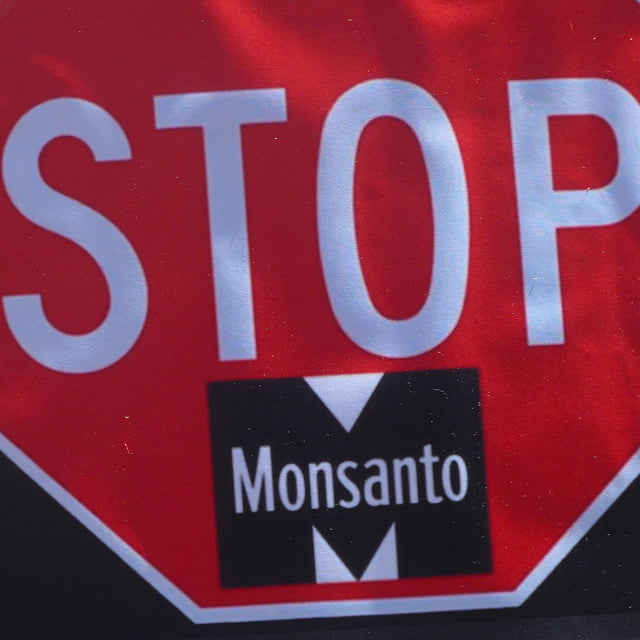
Surely you've heard of a seed company called, “Monsanto”?
When you're reading about GMO's, you don't get very far without hearing about Monsanto and their slimy business practices. Read this excerpt from the Organic Consumers Association:
The new Monsanto has clearly come to dominate the American food chain with its genetically modified (GM) seeds. It's a master at enforcing its 674 biotechnology patents, using tyrannical and ruthless tactics against small farmers.
Buy organic!
As of now the best way to be sure you're not eating food grown with GMO's is to buy organic. However, from my research I've learned that those waters may become muddy over time due to cross-contamination in farmer's fields, but for now that's all we've got…unless more of us are willing to get involved publicly and stand up for preserving organic standards.
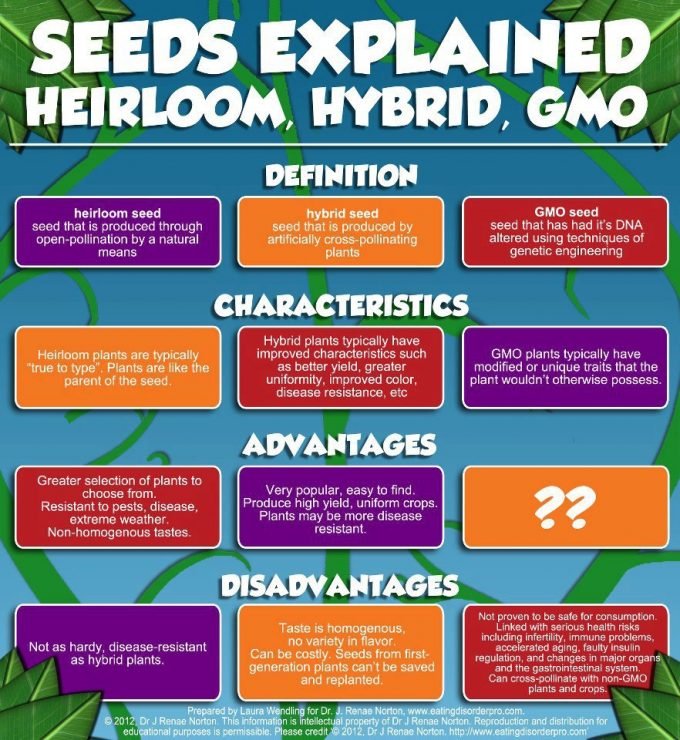
Here's a helpful picture:
Watch this short Jeffrey Smith video on the dangers of GMOs:
Watch the full length movie, Seeds of Death here:
Another short blurb that gets the point across well:
 Get Jeffrey Smith's book, Seeds of Deception: Exposing Industry and Government Lies About the Safety of the Genetically Engineered Foods You're Eating
GMOs – Did You Know…
- GMOs have been linked to infertility.
- “All of the European Union nations, Japan, China, Australia, New Zealand and many other countries require the mandatory labeling of foods that contain genetically engineered ingredients. As a result, food manufacturers in all those countries choose to use non-genetically engineered ingredients.” (Source) Why don’t we require it yet?!
- Find out how tricky it is to avoid CORN these days in this reeeeally good movie, King Corn.
More:
- What's the big deal about high fructose corn syrup and trans fats?
- Why eat local, organic, sustainable food?
- If you're a regular reader, please tell me that you're now taking your cod liver oil daily!
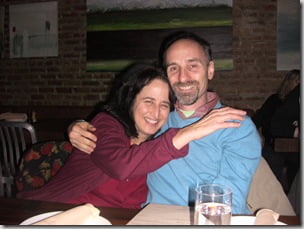
- I love this picture I took of Jeffrey Smith and his wife, Andrea, last month when we all went out to dinner before the conference.



James Cooper says
The scientific consensus after studying all the thousands of research papers on GMOs is that they pose no harm, and are just as healthy as conventional crops. See https://on.fb.me/1htyRi7
This is not something you need to worry about.
KitchenKop says
Lori,
I’d suggest you find a farmer who knows about all this stuff so you can trust that their meat is clean and their animals aren’t fed any of the junk you’re allergic to. Try http://www.eatwild.com.
Also, be sure to catch Dr. Oz next week as Jeffrey Smith will be on there talking about the dangers of GMOs!
Lori says
Sorry about previous post. I re-posted just incase.
I am so very glad I found your site here and on facebook. I was tested and found that I am allergic to Corn, Soy and Canola. I then saw a documentry on Roundup Ready Seeds and was even more shocked and then I thought maybe I am not allergic to the food but to the Roundup? I am now looking into eating ONLY organic if possible. I will be a great fan of yours for life. Keep up the great work because when you do I don
Kelly says
Patti, I’m sorry I missed your comment when you sent it in February! Hopefully you’ll still get this, not that I’m of any help to you. I’d suggest talking to other farmers around you!
Janet, frustrating isn’t it? But I love how it says in that article, “Things are tightening…”
Janet W says
Well, the laugh’s on me. I was going to recommend Sunspire organic chocolate chips — organic and fair traded chocolate. BUT they use soy lecithin and not organic lecithin (there is a push now to change especially organic foods to organic soy lecithin)
In an article i just saw on Organic Consumers, there is non-GMO lecithin, but it is processed chemically. See the whole deal here
Patti says
Hi, Kelly, I love your website. I have been trying to eat healthy and am getting into oraganic big time.
I have almost 5 acres and guess what I want to do? Live off it! And maybe do money making things too. ( I need a paying job) Any Ideas?
Kelly the Kitchen Kop says
Sonia,
GREAT INFO!!!!!!!!!! We also love that organization and often take the opportunity to give to the poor in that way instead of giving yet another useless gift.
I never knew they are also an environmental company, I thought they just helped the poor/hungry.
Regarding the Vatican: I haven’t researched it, and maybe they were just referring to HUMAN genetic manipulation, but in my opinion, anytime we start messing with God’s creation, whether it’s with human cloning or messing with food the way He designed it, it’s never a good idea. We Catholics mess up OFTEN (as we all do), but I’m thankful that the Vatican took this stand!
Kelly
Sonia says
In a newsletter from Heifer International (a worthwhile non-profit focusing on hunger and environmentalism http://www.heifer.org), a couple interesting GMO facts were given.
*4 out of 5 acres of GMO crops are Monsanto’s Roundup Ready. Take time to email Monsanto with your opinion! https://www.monsanto.com/who_we_are/contact_us.asp
*The Vatican recently added a more modern list of “social” sins to its traditional seven deadly sins. One is “genetic manipulation”. I am not Catholic and know little about Catholicism, but is this more than just an animal cloning issue?
As an aside, Heifer International is a great organization to contribute to. You can even purchase livestock for families in developing countries in someone else’s name as a gift. How about buying a gift of a sheep in dad’s name for Father’s Day ($120.00), instead of more golf stuff? Cheaper yet, a flock of chicks is only $20.00.
*ONLINE GIFTING: https://www.heifer.org/site/c.edJRKQNiFiG/b.2664267/
Kelly the Kitchen Kop says
Shauna,
Oh great, I didn’t see Nestle on that list…grrrrr
Michigan Mom2three says
Oh my – that list gave me reason for a BIG SIGH. I found SEVERAL things (Nestly toll house choco chips that I still use in cookies for my kids for example), that are on my shelf. Arg, Arg and double Arg! And – the fact that sugar sources will be from genetically modified sources this year….. all the more reason to give the junk up! 😉
Shauna
Kelly the Kitchen Kop says
Hi Nicole,
I agree, it is all very disturbing, but once you know what to look for on the labels (avoid soy products, high fructose corn syrup, try to buy mostly organic, etc.), or even better, avoid the inner aisles of the store, then we can be fairly sure we’re not eating GM foods. I’m working on a post now about the movie, “King Corn” – that is even more disturbing, to see how all the junk gets into our food supply…
Nicole B says
“65%: Actual percentage of products on grocery store shelves that contain unlabeled GE ingredients (usually soy or corn derived).”
This is disturbing and makes me not want to think about the subject too much. 🙁 Seems like if we want to eat real food we’ll have to make and grow it all… What ARE we doing to ourselves!? Reading that GMO food list by brands was creepy and disheartening too.