
Reader Question:
Hi Kelly, I’ve been reading your blog for a while now. I just bought a bunch of grass fed ground beef, roasts, and steaks. So far I've cooked the ground beef and one roast. The meat is sooo different and has a yucky type of smell to it. Honestly, I just don't like it. I thought that since it was natural and not messed with, it would taste better than what you buy in the stores. Is there something I'm missing…maybe a process of making it taste better or something? The smell of it cooking makes me want to gag, but at the same time I want my family to be healthy. Any advice???
Thanks!!
Ashley
My response:
That happened to us once and we had purchased HALF OF A COW!!! It was icky and I was so disappointed, too. Thankfully I didn't give up – we tried another grass-fed farm, and now I looooooove our meat – it tastes “normal”, like the beefy taste we're used to.
Does Your Raw Milk Ever Taste “Off”?
The same thing happened at the farm where we used to get our raw milk. As a matter of fact, most of the summer I couldn't even drink it. But where we get it now is much more consistent. Only once in a great while do I notice an off taste, but normally it’s so delicious and fresh tasting, even all summer long when the cows are on grass. That’s when the milk has the most nutrients, but also when it’s more likely to have the off taste because of where they’re grazing.
Why is milk (and meat) from “grass-fed” animals more nutritious?
From “Real Food: What to Eat and Why”: “Cows on grass contain more omega-3 fats, more vitamin A, and more beta-carotene and other antioxidants. Butter and cream from grass-fed cows are a rare source of the unique and beneficial fat CLA – CLA prevents heart disease, fights cancer, and builds lean muscle. It aids weight loss in several ways: by decreasing the amount of fat stored after eating, increasing the rate at which fat cells are broken down, and reducing the number of fat cells.” (Learn why raw milk is the best milk for us: Raw Milk Benefits and Information: Q & A with Mark McAfee).
Do you notice any taste difference?
Some people don't notice this off taste in the milk or meat at all (like Kent and two of our kids), but some totally notice and dislike it (like myself and the other two kids). It used to drive me crazy, I’d say, “How could you not notice that?!” I thought there was something wrong with me, why did my picky palate not like the more nutritious foods?! I really wanted to be able to drink the milk all summer long, when the cows were out on grass and it was most nutritious, and I’m so thankful we’re getting it at a new farm now.
If you don’t have many choices near you and can’t find another farm, try talking to your farmer to see if they’ll be able to figure out what’s causing it. I’m hoping to get some good comments on this post from others who are much more knowledgeable than I am and can clue us in more… I’d love to hear from grass-fed meat and dairy farmers to get your take on this. Has anyone else dealt with similar issues?
Why does that happen?
Kent’s guess is that it’s because the farmers where we get our raw milk now do a better job of managing their fields. At the other place the cows were probably wandering into more weedy areas or spots with dandelions or something else that gave the milk the off taste.
What to do with the off-tasting meat?
To use up the beef that you have, just make things like spaghetti sauce or something spicy. Then ask around before you try another farm, and be sure to try just one package of ground beef until you're sure it tastes good to you.
Your turn!
Please jump in and share if you have anything to add to the conversation!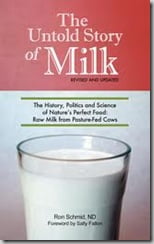
-
Here’s a book on the topic that you’ll definitely want to read: The Untold Story of Milk
- “Raw”/unpasteurized milk? Are you crazy?!
- Raw Milk Benefits and Information: Q & A with Mark McAfee
- Finding healthy meat options
- All about MILK: why not low fat? What should you watch out for with organic milk?
- Need a new perspective on DIETING?
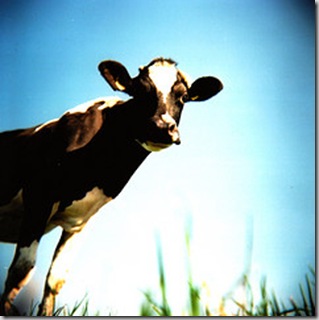
photo by jelles, Creative Commons 2.0



David du Plessis says
I drink a lot of raw Jersey milk, full cream from grass fed cows. Usually the milk tastes clean and delicious. Occasionally there’s a ‘meaty’ taste in the milk which really spoils it. I have spoken to a couple of dairy farmers, including the farmer I get the milk from. They have no idea! It tastes like more a different plant the cow is eating. I don’t think it’s mastitis as the cows are checked thouroughly, as far as I know. Are there any ideas? Thank you, David
KitchenKop says
Hi David,
Yes, this just happens occasionally depending on what the cows might get into on their pasture. That’s how you know it’s real food. 🙂
This happened recently and our farmers tried to credit us for that week’s milk but I wouldn’t let them, they do so much for us and I’m grateful! Besides, if I’d wanted milk that was cooked to death so it was guaranteed to never have a taste variation, then I’d get the factory milk from the store — ick!
Kelly
Sean Forehand says
I buy organic milk and meat from various grocery stores. I came across the mysterious taste only a few months ago in milk and shortly after in meat. By the way the taste in the milk is garlic. The meat I’m not sure yet. I switched the brands I bought in both milk and beef but still on occasion run into the foul taste. It could be the diet of the cow I suppose, but I doubt it’s anything to do with the packaging or it’d be more common. there could be any number of causes though. I just dump it out or throw it away…
KitchenKop says
Hi Sean, garlic in milk doesn’t sound pleasant! We had that once when our cows (at the farm where we get our milk) got into a patch of garlic. 🙂
Kelly
Susan Higgins says
I was actually just researching this on the internet and found this site which was helpful. Tonight, I cooked up this natural Maine, grass-fed beef burgers and they tasted “off.” Not like the meat was bad, but kind of had a funky gamey taste and smell. I hd to look to see if i accidentally picked up bison or some other animal (no). Then We were worried it had turned. But now I see it hadn’t. Interesting. I’ve had natural beef before, but maybe it’s just the grass/water/stress of the animal. Very interesting.
leena says
hello i am new to drinking fresh farm milk .i could really use some help .where i live it is not exactly legal to purchase raw milk so we can only buy it once a week and it seems as the week goes by the taste and smell get worse .The milk taste bad even the first day we bring it sometimes and sometimes it tastes fine .is it normal for it to smell like and taste weird as it ages .are we not pasturizing it properly ?can fresh milk last week long? the farmer is amish and he only gives the cows grass and grains .Any advice would be very appreciated .
KitchenKop says
Leena, your milk should be fine for a week but I was re-reading all the comments above and reminded of how important it is to chill the milk right away after milking and KEEP it very cold to prevent it from souring early. Maybe check with your farmer to be sure it’s kept very clean and cold?
Kelly
Rochelle says
Well so far, I’ve found a nice fix for my weird issue lol. I had a bowl of cereal and after I was finished, I ate a bite of banana. No weird aftertaste :). If anyone else ever has my issue, maybe this will help for our picky taste buds. Haven’t tried it with cooked dairy dishes yet but I think it might work for that too. Thanks for all the answers!
Commenter via Facebook says
As an organic dairy family, when we put our cows out in the spring the taste of the milk does change. We call it “pasture-ized” milk. It is a little stronger in flavor from the rapidly growing green grass the cows are eating. I would check into the plastic containers though. Milk can definitely take on the flavor of these containers. We have found that storing the milk in glass helps it not to sour as fast, also.
Commenter via Facebook says
If you are taking certain antibiotics, that might affect the taste of things.
Commenter via Facebook says
i’ve been told if a persons feet stink to take zink tabs so go figer?
Commenter via Facebook says
you may have a mineral inbalance try a multy vitamin an give it a week??
Commenter via Facebook says
ACK! I meant to also day that it DOES take some getting used to, the raw milk and grass-fed meats. Now, after four years, I cannot hardly stomach the flavor of other meats. LOL!
Commenter via Facebook says
JEEZ! Three taste buds to every one of others. It’s common and probably why some people notice taste variants while others do not. I’m called a “super taster.”. Maybe I should prepare the big S to go underneath my clothes. LOL!
Commenter via Facebook says
I actually had a test done and it confirmed that I have three taste buds
Commenter via Facebook says
I grew up drinking fresh cow’s milk and fresh-churned butter. I don’t recall any weird tastes.
Commenter via Facebook says
I was going to say the same thing. What the cows ate made a lot of difference in what the milk or the meat tasted like.
Commenter via Facebook says
Bandaid taste/smell ‘smells’ to me like plastic is the culprit.
Commenter via Facebook says
When I grew up on the dairy if the cows ate bitter weeds sometimes the milk tasted really nasty.
Commenter via Facebook says
lol yes I have experienced this. sometimes it has a strong cow flavor is what call it
Commenter via Facebook says
I should reiterate / seems like two issues: tasting off (cuz cow or goat is eating diff grass) vs tasting off (like bandaids). Was commenting on the later
Commenter via Facebook says
When you drink it straight from the tit it always tastes fresh. At least my experience. So my initial thots would be 1) they milk w/ latex gloves (had someone use them w/ mac nuts & they smelled like bandaids) 2) something plastic, silicone, or ? they use in their milking process 3) the bottle (even if the bottle is glass the top might be plastic /bpa 4) it sat one day too long
Commenter via Facebook says
Well, always heard that babies that are breastfed are less picky because what mom eats changes the taste of the milk, why would that be any different for cow milk?
Commenter via Facebook says
The higher the brix (measure of sugars/minerals) the sweeter the milk. Off taste could be stange plants, but if it’s in milk from 4 dairies, I would tend to think the soil in the area is depleted. The farmers could start foliar feeding diluted sea solids on the pasture and use it as a mineral supplement. Milk gets sweeter, shelf life is longer, cow gets healthier!
We are using Sea90 minerals from… https://www.seaagri.com/index.htm
Commenter via Facebook says
sometimes the body itself makes us taste the detox process which can be metalic .. or off … or gamey
Commenter via Facebook says
Our milk tastes more “off” in the Fall and Winter months, because there is less fresh grass for the cows to eat. Also, if there is colostrum in the milk because of a new calf, then it is extra strong!
Commenter via Facebook says
i can get organic milk all over the place, but real raw milk, with all the necessary fats we need in our diet, is as much as gold. i live between Yosemite national park and the San Joaquin [agricultural] Valley in the middle of California. extremely addicted to the ‘Monsanto’ way and half the days each year the air quality is far too bad for me to go to the valley for shopping and medical appointments
Commenter via Facebook says
last year a commercial dairy was so broke during the drought, he bought stale candy to feed his cows…
Commenter via Facebook says
Oh and I love the taste of raw milk it is just this lingering aftertaste that comes after I am done drinking milk or eating the raw milk in things.
Commenter via Facebook says
You put your live stock up at night.Just like I am getting ready to do with my big pit bull right now.If anything is out there shouldn’t be he tends to it.I let em all back out in the morning.
Commenter via Facebook says
Thanks for all the ideas! I live in a area that has at least 4 different raw farms. I’ve tried the 4 different dairies and a low-vat pasteurized (non-homogenized) dairy to double check if it was just raw and it wasn’t. I am going to try the glass jar next to see if I am just sensitive to the plastic. I may just not be used to the taste of real raw milk. I love how it makes me feel and may just grab a piece of gum afterwards ;). I think Kelly’s idea of a picky palate may be right on. Wish it wasn’t so but I will win this battle lol!
Commenter via Facebook says
I’d also love to know where you live! Ours is $6/gallon!
Commenter via Facebook says
That’s exactly what happened with us. (My story is in the post linked above.)
Commenter via Facebook says
Yes, our grass fed meat usually tastes like sage in our area. It’s different than the sweeter taste of corn fed beef, but not awful. I have detested milk since I was 10 years old, but did try raw milk from a local farmer. He feeds them garbage like rapeseed, etc., so that lasted the one time I got milk from his dairy…
JGirl says
I feel like the different sources of grass-fed beef in our area each have their own distinct flavor. I’ve figured their pastures are growing different types of grass/weeds making the flavors somewhat unique to each farm. The farm I buy from most has a little bit of a stronger flavor – but I LOVE the farmer and his family so much and it’s more accessible to me. My whole foods has a grass-fed section to their meat dep’t sourced from a local farm and their ground beef is much more mild tasting, but $8.99 a lb (as opposed to $6.50 from my farmer). It is disappointing when you buy an expensive steak it ends up being gamey.
Commenter via Facebook says
$40??? Where do you live? There’s got to be cheaper. Go to https://www.realmilk.com. I found a local farm that charges $6 though I used to pay $8 elsewhere.
Commenter via Facebook says
I think sometimes the milk tastes like straw, but it’s a cow eating grass. It’s supposed to.
Commenter via Facebook says
I once had a provider who’s milk tasted a little “gamey.” When we switched providers, the milk was sweet. I haven’t had a carton of gamey milk since. We pay $7 per gallon through a licensed provider.
Commenter via Facebook says
Coo, the meat low and slow, in plenty of spices.
Commenter via Facebook says
My mom used to get raw milk 30 years ago from a local farmer. She told me she could always taste when the cow got into a particular part of the field because the milk tasted off. It’s whatever the cow ate. Each plant gives a unique flavor to the milk.
Commenter via Facebook says
You buy cars, i inherit them. need car, like milk
Commenter via Facebook says
but we buy $18,000 cars? Id rather have the milk! 🙂
Commenter via Facebook says
the coyotes, mountain lions, badgers, foxes, bob cats …..would not be good to have a cow with all these predictors to kill said cow…or goat
Commenter via Facebook says
milk 40 a gallon? if not a cow… buy a milk goat
Commenter via Facebook says
have you asked the farmer?
Commenter via Facebook says
ACK>Buy a cow!!!
Commenter via Facebook says
Only when she eat onion grass.
Commenter via Facebook says
what makes me feel ‘off’ is that whole raw milk is $40.00 a gallon !
Rochelle says
I know this is an older post but I hope someone can help me. I love raw milk, it is so delicious but I have the weirdest aftertaste after I am done eating or drinking any raw milk. Not to be gross, but it is like a faint taste of the smell of bandaids. I have tried 4 different local farms. I even tried low-vat pasteurized to see if it was the raw milk but it was in all of them. Maybe it is just my taste buds? I also read it might be the plastic jugs. I am going to try the glass container raw to make sure. It is faint but I can even taste it cooked in things. I also don’t remember tasting it in the beginning around March so I am also wondering if I am not used to the “grass-fed” taste since grass is now growing. Funny thing is, I love grass-fed beef and no smells or tastes bother me. I swear it is just my stupid taste buds. Everyone else loves all these milks and have no problem. I will win this but I hope I can figure out what is causing it.
KitchenKop says
I’ll post your comment on FB and see if we can find out any more. You may just have a picky palate??
Kel
Rochelle says
Thanks! That sounds like me lol :). I wish I could just turn it off and not notice these things. I am hoping the milk will just grow on me. Maybe it is just a normal dairy taste and because I grew up with store-bought, I am just not use to it. I feel really great when I drink it so I am going to continue and grab a piece of gum afterwards if I have to.
Krista Henry Torsell says
Just to let you know Rochelle, it’s not you. We’ve been buying organic milk for almost a year and for the first time, the morning after we opened a new carton, we had to throw it out. It was disgusting! It tasted like band aid chemical. We are trying to find out what and why too. My son had choc syrup in his, he’s non verbal ASD and chugged it, now we’re concerned and watching him for signs of illness. Frustrating.
Laura says
HELP!
I am having a weird issue with my raw milk.
I am new to this and maybe this is normal, or not…
I live in a state where raw milk is actually illegal. A friend (previous owner of a dairy) has a young guernsey and we own a share of her and are able to receive the by products she produces. This winter she was fed a blend of hays and grasses to supplement her diet until she was moved and fully pastured. The move happened 2 weeks ago.
Here is my issue. Her milk has always been so fresh and delicious. Lots of cream that shook right into the milk and was so tasty. It stayed fresh tasting for 7-12 days. The last gallon I had came in 2 1/2 gallon mason jars that I wash and sanitize myself, as we have always done. The first jar was a bit earthy, which I expected with the move to grass. A friend tried a glass that was on the bottom of the first jar and said it tasted fishy. I didnt notice the taste until tonight when i opened the second jar. The second jar was from the same milking and was opened 3 days after the first. When I shake the jar the cream doesn’t mix completely, there are always some chunks that float on the top and stick to the inside of the jar. I warmed some up for my daughter’s cocoa and there was a film of yellow oil on top that definitely smelled fishy.
I have contacted the owner but her husband, the expert, is out of town. Is this something anyone else has experienced as the diet of the cow changes? Or does this seem like a problem?
Any information would be appreciated.
I expected a different flavor now that she is on grass, but fishy?! Ugh. I don’t think I will be able to handle that.
KitchenKop says
Hmmm, I’ve never heard of that one. Definitely talk to the farmer and see what he says, when you hear more let me know, I’m curious!
Kelly
KitchenKop says
Laura, I was just reading earlier comments and remembered that one reader said beef high in omega 3’s can cause beef to taste fishy. Doesn’t sound appetizing, but probably makes it more nutritious! (See the comment by Theresa Taylor above.)
Kelly
Laura says
I spoke with the family who as the cow today. We haven’t figured it out yet. It doesn’t seem to be unsafe or I drinkable just an off taste. It isn’t an infection like mastitis. The only thing we can think is that she got into something in the pasture. so they are going to pen her a few hours before milking and see what happens. It also sounds like, after doing some reading, that it could be that the fat came in contact with a metal other than stainless steel or that the water where they moved has a high metallic content. We are going to try a few things and see what happens…
Will update if I hear anything or get the problem nailed down!
Ben says
Breed and feed are the factors, get a good beef breed, I have found that feeding Soy meal makes the meat taste very fishy. Angus or Angus cross steers on burmuda will give you a steer that taste awsome.
Sarah says
Thank You! Thank You! Thank You! ALL of this information has been so helpful. We purchased a 1/4 beef in the fall and have never had such delicious steaks. However, recently I started noticing the “off” smell when the meat was cooking. I though I was going crazy–actually I thought I must be pregnant because I had a super nose when I was preggers. My husband–the hunter– thought the smell was from bone dust leftover from the butchering process because he recognized it from butchering his own deer. I’m relieved to know that trying a different farm might take care of the problem because I really like having grass fed meat to feed to my family.
Thanks again!
sunnybrookgal says
Hi! we raise our own pastured chickens, and they are tougher than shoe leather if you cook them as soon as they have been killed. We did this the first time we prepared one of our own chickens and were so disappointed, wondering what we were going to do with the other 24 in our freezer! A more experienced farmer clued us in to a trick: If you let them sit in the fridge for 2-3 days after slaughter, they are FABULOUS! We usually let ours sit for a day in the fridge after it is thawed as well (thaw plus one extra day) and they come out tender as butter with gravy to die for. Haven’t noticed any odd flavors, even though ours get not only scratch grain, bugs and greens from pasture but also choice kitchen leavings like zucchini and squash guts, leftover spaghetti (which is really funny to see them eating, as if it is long worms) and watermelon rinds to peck:)
Orrie says
Hey Everyone,
Just to let you know that I’m of a more mature generation. 🙂
When I was in elementary school I rather dreaded the springtime milk as it always tasted of “onions.”
If your farmer is doing what he should, don’t be afraid of the off-taste. It’s just a part of Spring/Fall etc. and what should be good for the cows and us. You never know what hidden nutrients are there for us when we need them.
G-d is still in control.
Lora says
My brother and I are also of a more mature generation :-), and we had the same experience as Orrie’s. We grew up drinking raw milk from our grandfather’s farm and dreaded the springtime milk. For several days after the cows first went out into the pastures after a winter eating hay in the barn, the milk tasted “oniony”/nasty. I remember my parents trying to convince us that adding chocolate powder or syrup would make the milk more palatable, but the strong taste overpowered the chocolate. The off taste gradually diminished as the cows adjusted to pasturing, and it was gone within a week, as best I can remember. There was a slight effect in the fall, when the cows transitioned from the pastures to hay, but much less intense.
Debbie says
I missed the post about the bitter taste and I should have commented on that. A bitter or salty taste in the milk is caused by mastitis. I can test my milk with an electronic device that tells me how conductive my milk is by the amount of “salt” in the milk The higher the number, the more mastitis cells are in the milk. You should be able to ask you farmer what his/her somatic cell count is and they should know the answer. They should definitely be testing for this along with bacteria plate counts, butterfat at the very, very minimum.
Debbie says
Hello All,
I am a 100% grass fed farmer and we raise both meat and milk. I off flavor in the milk easy to explain. If it tastes like onions, which I don’t think you mean, the cows is getting into onions in the pasture. The most common problem with milk smelling and tasting funky is that the farmer is not cooling his/her milk down fast enough. If the farmer has a bulk tank this shouldn’t be a issue for if it is a smallish farm, just get them to put the milk into the freezer for about 90 minutes and then into the fridge. The will take care of the bad smell/taste.
The beef is a different story. Poor management is usually this issue and I can say that because my first beef – 20 years ago – was tough and had a gamey smell and flavor. If the grass is good quality and the cows are not too old you will get the best beef – or lamb for that matter – that you’ve every had. You will always get what you pay for. So if the price is too good to be true you are probably getting an old dairy cow and not a prime beef cow. Ask what the breed is and how old the cow is. We have a 100% money back policy on all of our products so be sure to check with the farmer. IF they won’t back it, you shouldn’t buy it. The only way the farmers will get better at farming is if you, the consumer give honest feedback.
I hope this helps
Cherie Schenker says
We are fifth generation farmers who raise grass-fed beef. I often get customers who have purchased beef from other farmers and been less than impressed with the taste. Consistancy and flavor are the two things we are constantly working for. I have found that many producers are relatively new to raising grass fed beef. They may not realize that quality, grass-fed beef must be raised very differently than your average cow. Pasture management is critical, as is the age & weight at slaughter. In addition, any stress any animal is under can contribute to an unwanted flavor. I always, always encourage people to try a small bundle with some ground beef and a steak or two to see if our beef is a good fit for them. Most of the time, they come back to fill the freezer.
Here’s a good rule to remember: Take a look at the t-bone. The bigger the t-bone, the older the animal and the tougher & potentially gamier that steak will be. Also ask the producer if the have their ground beef tested for e-coli and if they dry-age their beef (we do both). If they do both, you are definately headed in the right direction.
Raine Saunders says
I just found this post when I did a search for “does hay affect the taste of milk”. We are suddenly having a flavor difference with our raw milk that we’ve been getting for nearly a year, and never before had problems with. The milk now tastes incredibly sweet as though it was not fresh, as in when the raw milk naturally sours.
There are two differences that have occurred recently which may have altered the taste of our milk – now that we have snow and sub-zero temps, cows are no longer eating grass in our region. The cows we are getting our milk from are eating alfalfa hay. Also, we have just started freezing the milk. We’ve never done this in the past since when we started getting it was February and cows were producing enough milk that we weren’t having to get a large quantity at a time and freeze. I called the farm and they suggested that a possible reason could be due to the diets of the cows, as they are now eating exclusively alfalfa and not grass.
Also when we freeze the milk, even though I went into my freezer and shook it up numerous times during the freezing process, the cream has completely separated from the milk and now will not return to its prior state before freezing. I thought this might be a problem before I froze it, but had heard reports that other people had used the shaking method at various intervals during freezing to combat the separation process. I don’t think my efforts worked…but now I’m also worried that this separation process has effectively made my milk not as healthy to drink since the fat is now in globules instead of how it naturally occurs when it comes from the cow.
Maybe the answer is simply that during winter months, it’s simply impossible to achieve milk in the same condition if you are freezing it than if it is fresh from the cow. I know this post is from July, but if anyone has had experience with this phenomenon, I’d really appreciate some information! 🙂
Katie @ Kitchen Stewardship says
re: Rebekah
When ours start to “go” a bit, we can usually still make a smoothie w/ yogurt and lots of frozen fruit.
Katie
KitchenKop says
We used to mix it with some organic chocolate syrup and could get it by some of the kids (not all) that way…
Rebekah says
Is there anything you can do with off raw milk besides cook with it. We have some and it has an awful aftertaste.
jo says
My son drank a glass of fresh milk from a carton which tasted really bitter.Why is this so?The milk is still within expiry date.I hope he will be alright after drinking it.Would appreciate if somebody can tell me why.
Kelly says
Rachel,
This is all so crazy-interesting to me, and makes me realize all the more how blessed we are to have a great farmer nearby. They are not always easy to find (hopefully that is changing), but when you do, we need to be sure and appreciate them!
Kelly
Rachel says
Anna said: “Some farmers are new to the grass model and might not have the right breeds or be managing their pasture right. Pasture-management became a lost art among many farmers, so it pays to do some homework.”
She is right on here. My husband’s family raises beef cattle the conventional way. He is interested in getting into intensive rotational grazing so that we can do grass- feed instead. Many farmers are seeing the difference in price and thinking that grass-fed may be the way to go. However, many don’t realize that it takes extra work because to have quality beef (both nutritionally and flavor- wise) they have to learn a whole new skill- pasture management. A farmer who has good grass fed beef can walk through a pasture with you and not only tell you what the plants are but also what impact/ benefit they have and how long they have been growing in that pasture. Most pastures are not ready to produce quality beef as many of the native grasses and plants have been exterminated or forced out. So pasture management is a key difference. You can have the same cows on different pastures in the same area and still get a vastly different taste!
Sharon Miracle says
We just purchased a sampler pack from a grass fed rancher here in SC, and UGH! the meat tasted awful. Even raw, you could smell that the meat was “off.” The only way I can describe it is that it tasted VERY strong like lamb, but no lamb that you’d want to eat. I’m glad I found this web site and did more research on the internet, because apparently not all grass fed beef is created equal. I’m just so glad I had enough sense to order a small quantity before committing to a 1/4 beef!
Kelly says
Bekki, thanks for the heads up in case I’m ever offered a similar deal!
Paula,
A friend just teased me today, saying that soon I’ll have chickens in my yard – you’re tempting me more!
Kelly
Paula says
Jessie,
Pastured chickens are “tougher”, because they are actually using their muscles, as opposed to sitting in a building all packed together, resulting in soft flabby flesh.
You can cook your chicken in a crockpot most of the way, and then finish it in the oven to crisp up the skin.
We are rasing meat birds right now, and they are half pastured.
We are not able to afford truly good grains for them this time around, but they get supplimented heavily with saurkraut, fish broth,raw kefir, kombucha in their water, apples and other scraps, as well as all the greens and bugs that they have learned to scavange for.
This is their last week, and they are on free range restriciton, because they are desimating my giant Alaska Cabbages.
Like my husband says, we cannot have one cash crop, eating the other cash crop LOL!
We have processed a few of them and taste tested one.
Utterly fantastic!!! Yes, a bit tougher, but that is showing me that they are healthy and getting excercise!
Paula
Bekki says
I’ve had issues like this before. I’ve had raw milk from three different states now, and it never tastes the same. The Kansas milk was definitely the weirdest… smelled SO grassy. Tasted ok, but almost had to pinch my nose. The cream never tasted very good, either, which was a huge disappointment for me! I personally love all the Texas goat milk I’ve tasted (haven’t been able to stop myself from tasting, even though I’m allergic to dairy now)… so creamy. Ahhh, I love talking about fresh raw milk. Anyway… I’ve had pretty awful grassfed beef before. The first time I bought over 1/4 of a cow, and the roasts and steaks were beyond fabulous. The ground beef, however… blech. It tasted like ground turkey. I learned to really spice things up- even our hamburgers. We just didn’t eat a lot of hamburgers until that beef was used up. I have no idea why there was such a difference between the steaks and the ground beef. Same cow. Puzzling.
Since then I’ve bought 1/4 of a cow from a dairy farm… one of their young steers (somewhere between veal and whatever age they are usually butchered at) and it doesn’t have the same depth of flavor that I’m used to. But I expected that. Got a really good deal on it. *sigh*
Oh, I do want to say… when I was still in Kansas my milk (and beef, pork, chicken) farmer sent out a notice that one of the dairy cows had broken her leg badly and had to be put down. Her meat was for sale at a big discount, if anyone was interested. Always keen for a deal, and wanting to test myself (first time eating meat where I knew it’s name!) I bought some ground beef.
BLECH!
Maybe it was the breed, maybe it was her age, maybe it was the adrenaline from probably being in pain. But it was horrid.
Sabine says
@Jessie: the common hamburgers are made by lean meat and extra added 30% fat for taste.
Lean meat doesn’t make yummy food on the grill – it’s just too dry and the lack of fat as a “flavour carrier” makes it taste bland.
And the chickens from pasture are running around and building up real muscles, the chickens from feedlots are only standing around and can’t move much, so they have soft tissues instead of muscles.
And the pastured chickens need more time to gain weight, up to 12 weeks and the store-bought chickens are butchered at an age of only 6 weeks.
So if the pastured meat is more “meaty” it’s a sign of quality and no fault. Just cook it a little bit longer at lower temperature.
Kelly says
Jessie, I haven’t noticed a difference in cooking pastured chickens, has anyone else struggled with this? For cooking grass-fed beef, check out this post:
https://kellythekitchenkop.com/2009/02/5-ways-to-achieve-grass-fed-beef-cooking-nirvana-guest-post-from-the-food-renegade.html
Katie, our former milk was from an Amish farmer up north who phased out his raw milk cow share program.
Kelly
Katie @ Kitchen Stewardship says
We are having such trouble with this right now. My husband won’t drink our raw milk after about 2 days because it has such a sour smell and taste. We’ve been working hard to keep the “cold chain” consistent, using our coolers and ice packs, to not avail. I’m emailing our farmer an excerpt from Theresa’s comment above – maybe the tying up thing will help! Thanks for this post; it’s good to know we’re not alone. (Are you still at Lubbers’, Kelly? Might I ask what your former milk farm was?)
Katie @ Kitchen Stewardship
kerri says
We kept our cow in at night and than she would graze during the day and still had that ‘funny’ smell and taste, so for us we didn’t see any difference from the evening or morning milkings. I am not crazy about the difference but I will take fresh milk from my cow over store bought any day 🙂
Jessie says
I would like to echo the comment about knowing the breed of animal – it does make a big difference.
Another question I’d be curious to have Kelly post sometime & people weigh in on is how to cook patured meats as compared to non-pastured. I’ve had more issues with chickens than with beef – sometimes they seem pretty tough as compared to a store bought chicken. Even chickens from the same farm – sometimes they come out good & sometimes not. The biggest beef issue I’ve had is with burgers on the grill – they’ve not seemed to have as much taste as I thought they would.
Kelly says
Wow, you guys are full of great info, thanks everyone, keep all the good scoop coming. 🙂
Charity Grace says
I grew up with a milk cow and a particular gourd would make her milk taste bitter. When it began to taste off we had to examine her pen and make sure we chopped all the gourds out.
Charity Grace
Catherine says
I also want to comment about the abattoir and how the meat is processed. My girlfriend that I get my meat from is extremely picky to where she gets her animals butchered and processed. When she talks to me about it, my head is always spinning with all the science behind meat processing. My ground meat and hamburger patties are processed with ice chips so they maintain a softer texture.
Catherine
Jen says
Recently our milk smells “grassy”, but I assume it’s because the cows are eating rapidly growing green grass. It still tastes fabulous.
However, I completely understand the “off” smell, and sometimes taste of grass fed beef. We purchased 1/4 beef last November. The roasts, slow cooked in the crock pot are great. Steaks cooked on the grill are amazing. Even the hamburgers are good when they’re grilled. When I cook ground beef or steaks on the stove, or in the oven or broiler… well, it’s not so good. I like the advice of using lots of spices and sauces. 🙂
I plan to find a different farmer, when we’re ready to make our next bulk purchase. It’s worth it to me to search out a product I like.
We also purchased 1/2 pastured pork, and 10 chickens from the same farm. I later discovered (to my dismay) that they are fed non-organic feed with corn and soybeans. Which of course means it’s genetically modified. In addition, I noticed the label from the processor on the sausage one day, and right there in the listed ingredients is MSG and nitrates!!!!!!!! All of this pretty much defeats the purpose of “pastured” in my opinion. Please make sure your processors aren’t using those nasty ingredients too!
Bill says
I think off flavors on the milk are most likely to be a problem with refrigeration or sanitation allowing off bacteria to breed. I know this because our raw milk is fantastic, normally, but have had two bad batches lately–one from a valve or something that went bad and it turned sour like cheese but from random bacteria rather than a specific culture, and one from a problem with their bulk tank refrigerating fast enough. The milk in essence went sour too soon–they found out the problem and credited us our boarding fees for the bad milk.
I’ve never had this problem with our beef, which is mostly grass-fed, but with only a little supplemental grain (they live out on pasture), on an organic, Amish farm. The flavor is through the roof, so I always wonder when people complain whether it is a question of knowledge by the farmer or if there is a difference with 100% rather than 95% grass fed. Sally Fallon argues that beef does not have to be 100% grass-fed, since grains replicate some of the natural, seasonal foods that would be available. I have also had 100% grass-fed ground beef from two farm sources and one store-bought–the farm bought ones were excellent, though maybe a tad less excellent than our regular source. The store bought was not that great, kind of dried out, but decent and no off-flavors.
I have heard of people asking a farmer who normally grain-feeds to leave a cow out on (crappy) pasture and I would expect that to result in underfed, non-nutritious, stringy beef. So I would guess that you need to find a farmer who knows how to raise grass-fed beef properly.
Anna says
Definitely, the concept of “terroir” comes into play with grass-fed animals and their milk. We are what we eat. Europeans are very sensitive to this, but Americans have largely lost this distinction due to generations growing up on bland, uniform industrialy controlled supermarket food. I remember thinking my English in-law were nuts when they compared butter from different places, but now I “get it”. Butter isn’t just “butter”.
I have a friend who grew up in Germany and she can’t stand frozen beef. She says it has a funny taste when it has been frozen, but I can’t taste that. Go figure.
https://en.wikipedia.org/wiki/Terroir
I’ve been consuming pastured bison for two years, plus some wild field-dressed venison when my huntress sister shares, so my palate has definitely changed toward the bolder flavors. I find corn-fed supermarket beef to be so bland and boring now, and always a disappointment (which helps to resist the cheap prices). I also find boneless chicken breasts almost inedible and boneless pork loin roast really boring; now I always go for the more flavorful bone-in cuts. Perhaps the lower fat content of grass-fed meats might mean the other flavor constituents come through stronger and more bluntly.
It’s definitely a good idea to try some of the meat before committing to a huge bulk order. Some farmers are new to the grass model and might not have the right breeds or be managing their pasture right. Pasture-management became a lost art among many farmers, so it pays to do some homework.
Andrea says
I notice that both my grass-fed milk and beef have a stronger flavor than store bought. I think once you get used to it, it’s not bad at all…as long as the taste isn’t too strong. At one farm, the strong taste in the milk is bad enought that I can’t drink it. My mother says that she read that the milk has to be chilled immediately, or it will develop a strong flavor. I dont’ know if this is true or not, but it is an idea. Perhaps some farms are able to chill it faster or colder than others.
MacKenzie says
We drink raw goats milk and every once in a while I get a sip that just tastes – goaty. It’s not really a bad taste, I just instantly think “goat.” The first few times I wasn’t sure I could handle it long term but now I don’t even mind, I just think it is odd. Especially since it is that it really is only a portion of the gallon each time. I am a bit weary of trying to make ice cream or yogurt if I know it will be served to guests.
MacKenzie
Vin | NaturalBias.com says
Wow, I’d be so disappointed by an entire side of bad tasting meat! I’ve had cuts that taste better than others, but I don’t ever think I’ve had one that I truly thought tasted bad.
Interesting information, Theresa!
Vin | NaturalBias.com
Abbie says
It is my understanding that different cow breeds taste different. Ask your famer what breed of cow they raise and how that the meat typically tastes, where it is fed (what it is fed, and what kind of grain it may eat before slaughter), and about the typical texture of the meat. My parents buy their grass-fed beef in NH and their meat tastes different than the meat we buy here in VA. If you have a farmers market near you, you could buy a single cut to try before committing to a whole side! good luck. Abbie
Abbie
Kelly says
Theresa, that is so interesting – I wonder if very many farmers know this? Thanks for sharing your knowledge!
Theresa Taylor says
Hi,
I have been farming grass-fed beef, chicken, milk, and eggs for seven years. I agree with the posts about grass-fed sometimes smelling and tasting off. In order to get the grass smell out of the milk, the farmer has to tie the cow up for a 2 hours prior to milking. This works for both goats and cows. As far as meat goes, a farmer should confine the steer for 3 days and feed hay. If your meat smells like fish, that is a good thing, omega 3 fatty acids…. If your meat smells strong, but not like fish, that is the minerals, probably too much potassium in the grass prior to butchering. If you butcher in the winter, your beef is probably eating rye grass. Lush new grass growth, even mid winter can have a negative effect on the taste of your beef. Ask the farmer to feed your beef hay for three days prior to butchering. It will affect the nutrients very little as long as he has been pasture raised. Also ask about how your beef is killed. If your steer is stressed on the day that he is butchered, he will have tons of adrenaline flowing through his body. This will give an off taste to the meat. I like to butcher steers myself, because I kill them as they are eating their hay. They are peaceful and then gone. I always pray and ask God for mercy before killing any of my animals. These are all things you can ask your farmer to do, or you can do yourself if you are the one butchering your own beef.
Theresa Taylor
Eleanor K. Sommer says
I think part of the reason, we flinch at the taste of real grass-fed meat is that we are accustomed to the “sweet” taste of cows, etc., that have been “finished” with grain. Even some meat labeled “grass-fed” is not so right up until slaughter time. At some point some cows are fed grains and this, in my experience, makes the meat taste like what we have been accustomed to.
I had the same experience the first time I cooked grass-fed beef. I thought something was severely wrong, but when I talked with other people, I discovered that my palate was just not experienced with this new taste and I should give it a chance.
Unfortunately, my husband will not eat beef of any kind, so I don’t have it often enough to develop the “taste,” but at least I know what to expect when I do, and I figure after a few years, I won’t even remember what grain-fed beef tasted like.
Eleanor K. Sommer
Sabine says
Yes, the taste of milk and meat depends on the variety of plants on the pasture.
A friend of mine fed a few kohlrabi leaves to her milk sheep and the milk tasted for 3 days very ugly like cabbage. Wild leek, onions and garlic are worse.
It’s not the fault of the farmer but the typical “local” taste of that pasture. You just can’t control what the cows are eating of it.
And that’s the reason why there are so many different kinds of cheese allover the world – the taste comes from the local pasture with the different minerals in the soil and the different plants.
You can tell easily the difference between a cheese from the marshlands and from highlands – the plants differ a lot.
So don’t blame the farmer if you don’t like the taste of his milk/meat – it’s just “local” and very special. 😉
Girl Gone Domestic says
I will never forget the time I was cooking some grass fed ground beef and my Dad walked into our house and said “Having fish for dinner?” I think grass fed meat can have a funky smell and stronger taste. Our pastured chickens we’ve been buying also have a “game-y” taste. But we pay so much and do it for the nutrients, and like you said, cook it into things and you don’t really notice. Have never had a problem with our raw cow’s milk, but two of my kids drink raw goat’s milk…that is another thing entirely, sometimes I smell it and blech! :p
Girl Gone Domestic
G.G. says
This is the problem with the modern, Western palate, not a problem with the meat. Most of us are used to the bland taste of meat — poultry and red meats — that have been raised on high weight gain diets — corn and other grains — that allow farmers to send their animals to the butcher younger. We are no longer used to the gamey taste of cattle and chickens raised on slow growth forages. True grass-fed beef will taste more like venison than the beef that you probably grew up on. But like anything, once you get used to it, you grow to appreciate it and don’t go back.
Don’t fall for the ‘grass fed beef’ that tastes like beef as you remember it. In all likelihood the seller isn’t telling you the whole story.
By the way, I raise grass-fed beef and pasture poultry and I get asked about this all the time.
KitchenKop says
G.G., I know, I think you’re right on. I just wish my palate *didn’t* crave the beefy taste I know and love… And over time it may get better, but some of it is SO gamey, I just can’t do it!
Kelly